Loading article…
wallpaper calculatorhow to measure wallpapersquare metres
How to Measure Wallpaper: How Many Square Metres of Wallpaper Do You Need? (With Examples)
Wallpaper measuring made simple: width × height. How it differs from counting rolls, the door-and-window rule, and ready-made room tables for the right answer in two minutes.
D
By Dekoartizan Tasarım Ekibi··8 min read
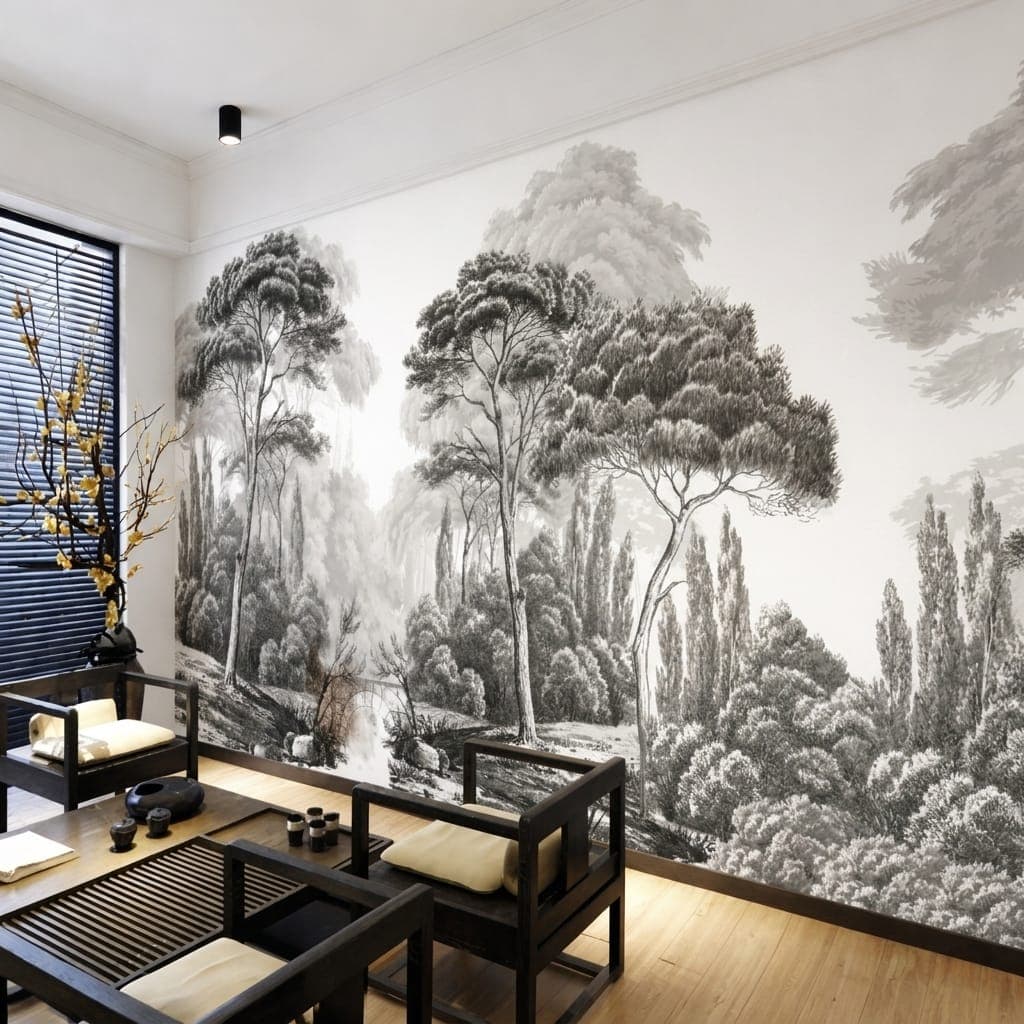
Learning how to measure wallpaper is really one line: wall width × height. For example, 4 metres × 2.7 metres = 10.8 m². With made-to-measure digital printing that is the whole job — no waste, no pattern repeat to worry about, no leftover roll ends.
If you are buying ready-made rolls, things get messy: the same wall can need five or six rolls depending on the pattern repeat. Below we work through both methods with examples.
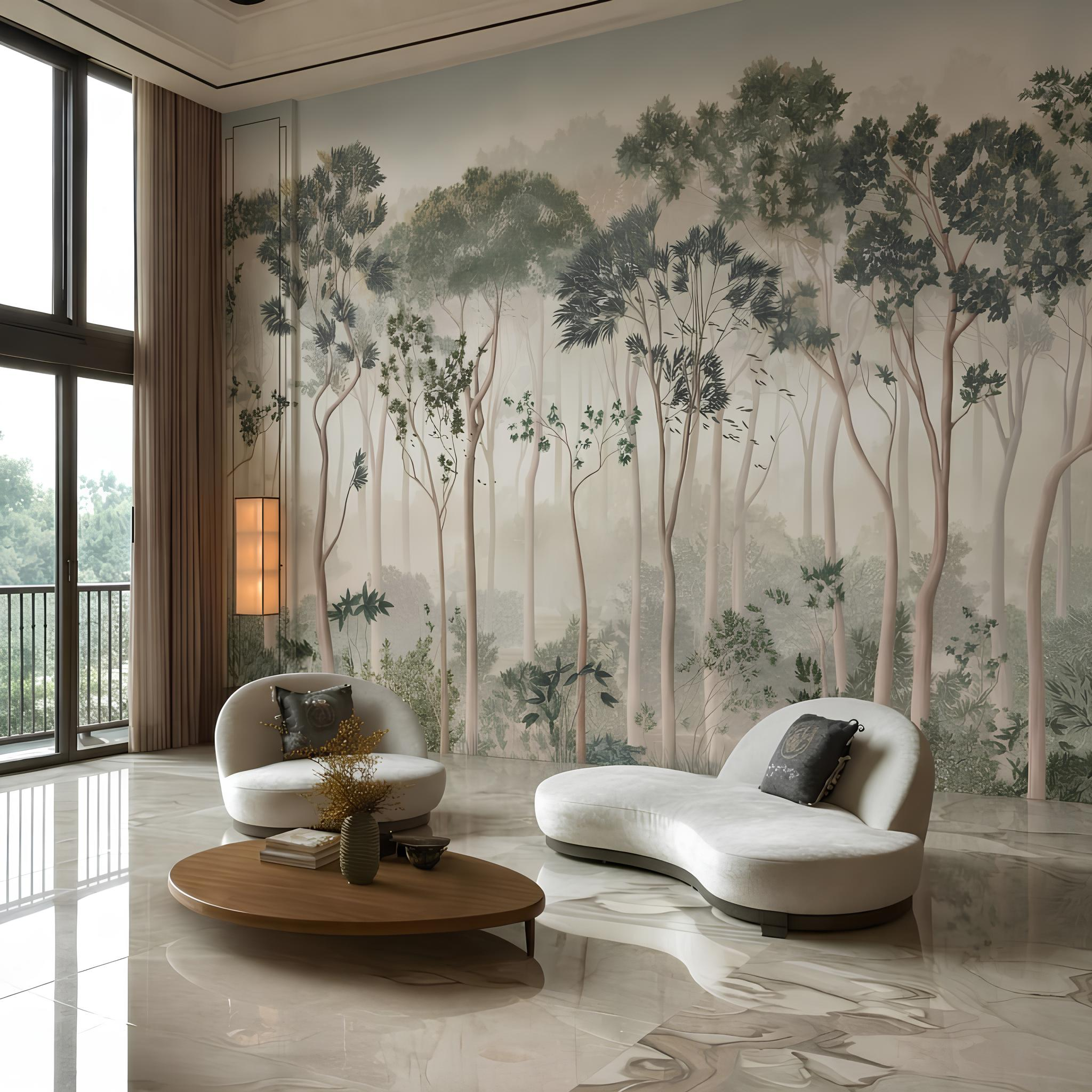
How to Measure Wallpaper for Made-to-Measure (2 Steps)
1. Measure the Width
Run a tape measure from one end of the wall to the other. If skirting boards and cornices are to sit inside the print, measure between them. In older buildings, measure at two different heights and take the larger figure — a 3–4 cm run-out from square is perfectly normal.
2. Measure the Height and Multiply
Measure from the top of the skirting board to the ceiling (or to the underside of the cornice). Multiply the two figures: that is your order area in square metres. Enter these two measurements into the calculator on the product page and the price appears instantly; for prices per square metre, see our 2026 price guide.
Do You Deduct Doors and Windows?
This is the question we are asked most. The rule: do not deduct for standard doors and windows. The design is produced as a single composition for the whole wall; the openings are trimmed out during installation. If you deduct them, the pattern alignment breaks and there is no margin left to cut. The one exception is a glazed wall or wide opening that covers more than half the wall area — in that case write to us before ordering so we can plan the production in sections.
Ready Room-by-Room Table (Standard 2.7 m Ceiling)
| Wall | Width | Area (2.7 m ceiling) |
|---|---|---|
| Behind the TV unit | 3.5 m | 9.45 m² |
| Headboard wall | 3 m | 8.1 m² |
| Children's room wall | 2.8 m | 7.56 m² |
| Wide living-room wall | 5 m | 13.5 m² |
| Single hallway face | 6 m | 15 m² |
| Kitchen splashback | 2.4 × 0.6 m | 1.44 m² |
- Behind the TV unit (3.5 m): 3.5 × 2.7 = 9.45 m²
- Headboard wall (3 m): 3 × 2.7 = 8.1 m²
- Children's room wall (2.8 m): 2.8 × 2.7 = 7.56 m²
- Wide living-room wall (5 m): 5 × 2.7 = 13.5 m²
- Single hallway face (6 × 2.5 m): 15 m²
- Kitchen splashback (2.4 × 0.6 m): 1.44 m²
For apartments with high ceilings (3 m+), swap the height figure for your own measurement; around Ataşehir and Ümraniye we take free on-site measurements.
Counting Ready-Made Rolls: Why Is It More Complicated?
A standard roll is 53 cm × 10.05 m (5.3 m² gross). But gross ≠ net: you lose the length of the pattern repeat on every drop.
The Roll Formula
- Number of drops = wall width ÷ 0.53 (round up)
- Drop length = wall height + pattern repeat (e.g. 64 cm) + 10 cm trim allowance
- Drops per roll = 10.05 ÷ drop length (round down)
- Rolls needed = number of drops ÷ drops per roll (round up)
Example: 4 × 2.7 m Wall, Pattern With a 64 cm Repeat
Drops: 4 ÷ 0.53 = 7.5 → 8 drops. Drop length: 2.7 + 0.64 + 0.1 = 3.44 m. Per roll: 10.05 ÷ 3.44 = 2.9 → 2 drops. Needed: 8 ÷ 2 = 4 rolls (you pay for 21.2 m² gross; the wall is 10.8 m²). In other words, with ready-made rolls you pay for almost twice the real area in material — and that is exactly why, once you run the numbers, made-to-measure often turns out cheaper than its "expensive" reputation suggests. A detailed comparison is in the main guide.
The 4 Most Common Measuring Mistakes
- Measuring at one point only: Because of run-out from square, the paper can end up short. Measure at two points and take the larger one.
- Forgetting the skirting board or cornice: Be clear about where the print starts and ends; "ceiling to floor" and "cornice to skirting" give different square metres.
- Leaving no allowance: With made-to-measure, a 5 cm allowance is already added to production on each side; even so, give the measurement without trimming it down.
- Treating a sloped or attic wall as a rectangle: On the sloping walls of a loft, give the widest and tallest points and cut to fit during installation — there is no remedy for under-production.
Sloped and Attic Walls
The triangular and trapezoidal walls of lofts cause confusion, but the maths is simple: complete the wall into a rectangle in your mind and give the widest × tallest measurement. The print arrives as a rectangle and the angled trim is done during installation. "Am I overpaying?" — yes, there is some extra material equal to the triangle that gets cut off; but there is no other way to keep the pattern whole: sectioned production that follows the slope works out far more expensive because of pattern drift at the seams. On a sloped wall, ask for the focal element of the composition to sit in the middle of the visible area rather than the exact middle of the rectangle — just note it on your order.
Ceiling Covering Calculation
Wallpaper on the ceiling (clouds, sky, a wood look) has been a rising request in recent years. The calculation is the same as for a wall: width × length. The differences are in the application — a ceiling job needs two people and a platform, and the installation cost per square metre is roughly 1.5 times that of a wall. For ceilings larger than 12 m² we recommend two-piece production rather than a single piece; aligning one huge piece overhead is hard even for a professional team. For bathroom ceilings specifically, read the condensation note in our bathroom guide.
L-Shaped and Columned Wall Example
A living-room classic: a 4-metre wall with a column projecting 40 cm in the middle. There are two approaches. If keeping the pattern whole matters (a landscape, a large floral), give the entire run as a single measurement: 4 × 2.7 = 10.8 m²; the column faces and the side returns are included in the composition, and the cutting is handled during installation. If the pattern is repeating or textured, calculating the column as a separate piece (front face + two sides = separate drops) saves on material. Whenever you are unsure about a special case, write to us with a photo of the wall plus rough measurements; we will firm up the production plan along with its cost.
What If the Measurement Changes After Ordering?
If production has not started, updating the measurement is free — the difference in square metres is either charged or refunded. Once production has begun, the print is personalised, so a change means a new production run; that is why you should double-check your measurement before approval. Your safeguard against small surprises is this: the 5 cm allowance added to every edge in production already covers measuring errors of 2–3 centimetres.
Frequently Asked Questions
How do you measure wallpaper in square metres?
Width × height. 3.5 m width × 2.7 m height = 9.45 m². That is the figure you order with made-to-measure production.
How many square metres is one roll of wallpaper?
A standard roll (53 cm × 10.05 m) is 5.3 m² gross; with pattern-repeat losses the usable net area usually drops to 3.5–4.5 m².
How many rolls do you need for a 10 m² wall?
4–6 rolls depending on the pattern repeat. With made-to-measure digital printing, you order exactly 10 m² — no waste.
My ceiling is over 3 metres high, will that be a problem?
No; with digital printing the height limit causes no practical problems, and the image is scaled to your measurement. For walls over 3.2 m we recommend an on-site measurement.
I'm not sure about my calculation, what should I do?
Send a photo of your wall and a rough measurement to our WhatsApp line; we'll do the calculation together. In Istanbul's Anatolian side you can also request a free on-site measurement.
If I share my calculation with you, will you check it?
We will — send your measurements (width × height, with a sketch of any doors and windows) via WhatsApp; we'll confirm the net square metres including production allowances and the price the same day. This five-minute check before ordering eliminates the risk of a wrong production run, especially on sloped and columned walls.
Can several walls be calculated in one order?
Yes — you enter each wall's measurement as a separate line, and the system creates a single order from the total square metres. You can also choose a different design and a different paper type for different rooms; production completes them all in one batch, and they arrive in one package. On multi-wall projects, as the total area grows, the instalment option also eases the budget.
From our shop
Wallpapers You Might Like
3D White Stone Brick Textile Wallpaper
Classic Chinese Motif Burgundy Wallpaper
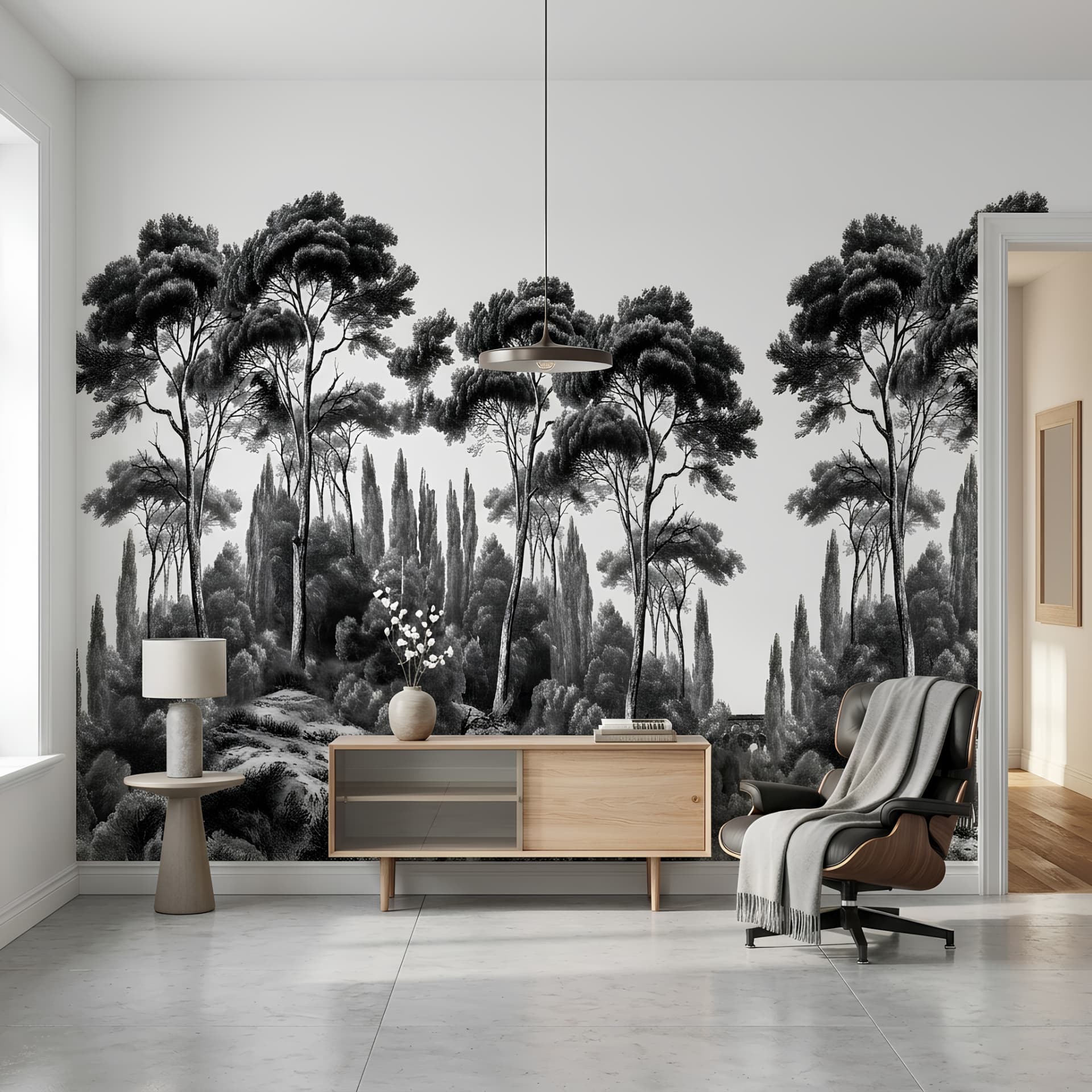
Black & White Vintage Forest Wipeable Wallpaper
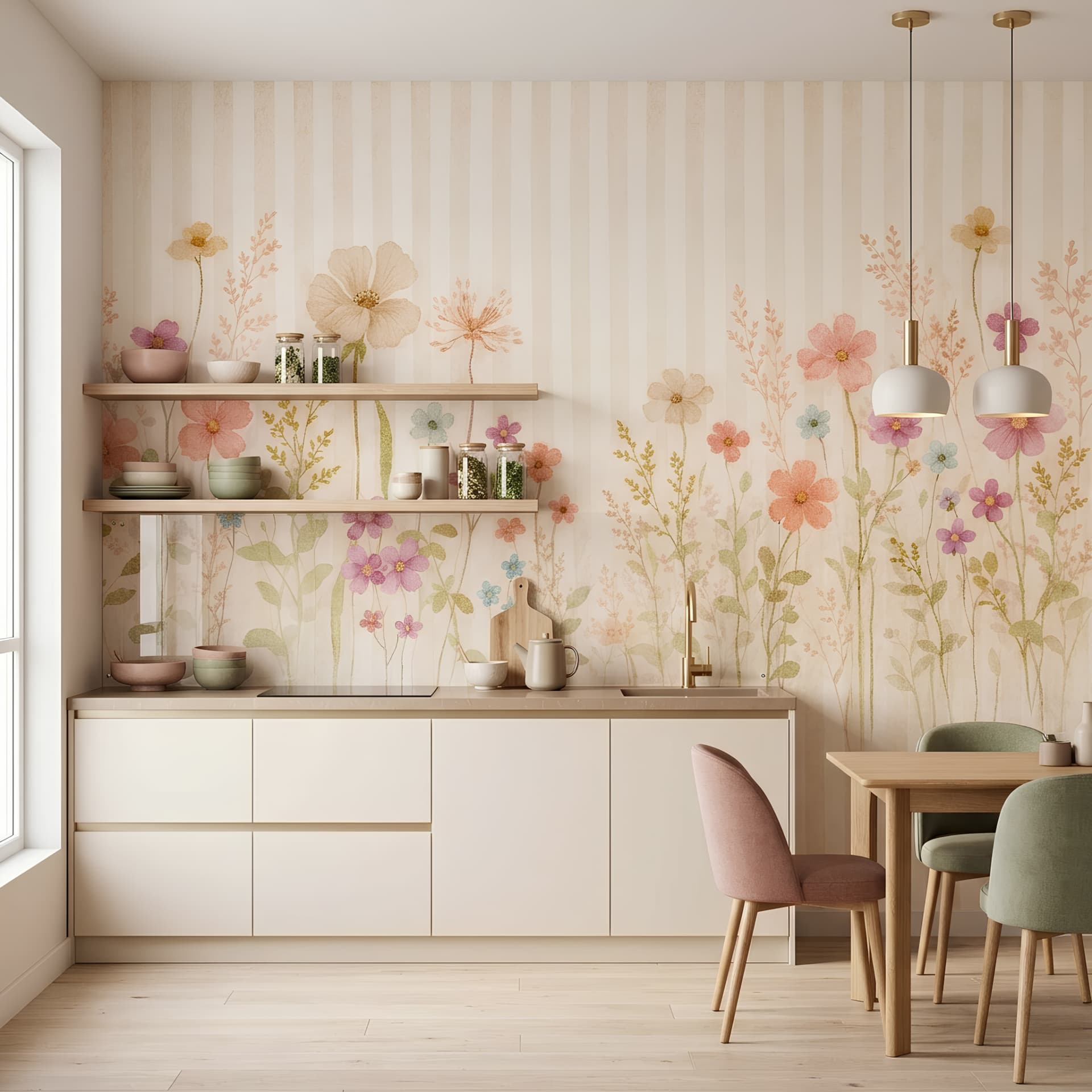
Pastel Spring Garden Striped Wallpaper
DA
Dekoartizan Tasarım Ekibi
Duvar kağıdı sektöründe uzmanlaşmış tasarım ve içerik ekibimiz, iç mekan dekorasyonu, malzeme bilgisi ve uygulama teknikleri konusundaki birikimlerini bu rehberlerde paylaşıyor. Tüm içerikler saha deneyimi ve güncel sektör verileriyle desteklenir.
İçeriklerimiz saha deneyimi ve sektörel uzmanlığa dayanır
wallpaper calculatorhow to measure wallpapersquare metreshow many rolls of wallpapercustom size wallpaper