Loading article…
bathroom wallpapermoisture-resistant wallpaperpeel and stick bathroom
Bathroom Wallpaper: Moisture-Resistant Designs and Rules for Use
Wallpaper works in a bathroom with the right material: wipeable vinyl/peel-and-stick film, walls away from the shower, and good ventilation. A guide with design picks.
D
By Dekoartizan Tasarım Ekibi··8 min read
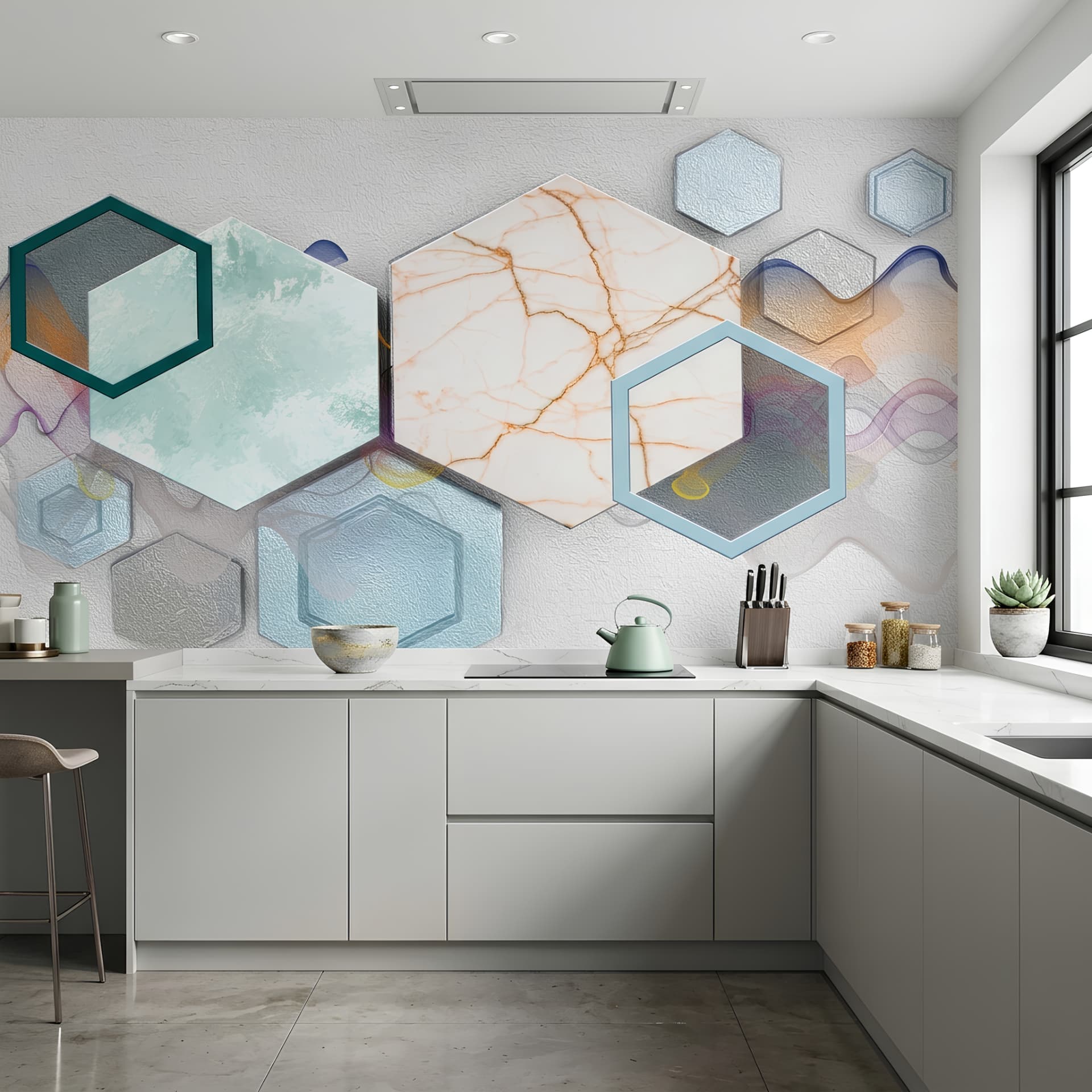
Can bathroom wallpaper really survive without falling apart fast? With the right material on the right wall, yes. Wipeable vinyl or peel-and-stick film holds up for years on walls that the shower and tub don't splash directly.
It comes down to three conditions: zero contact with the shower, regular ventilation, and seams pressed down well. The bathroom favourites for 2026 are marble looks, dark botanicals, and vintage tile patterns.
Does Wallpaper Work in a Bathroom? (The Straight Answer)
Yes — with conditions. A bathroom's enemy isn't water, it's condensation and stale air. In a bathroom with a window or an extractor fan, the basin-toilet run and walls away from the shower are the safe zone for paper. The inside of the shower enclosure and the area right next to the tub are always tile/panel territory; we don't recommend paper there. Customers who draw that line correctly see 5+ years of trouble-free use as standard.
| Bathroom zone | Recommended surface | Why |
|---|---|---|
| Inside the shower or next to the tub | Tile or panel, no wallpaper | Direct water contact |
| Basin & vanity wall | Self-adhesive film or vinyl (about 950 TL/m²) | Wipeable; handles water vapour |
| Walls away from the shower | Vinyl, or textile if well ventilated | The bathroom safe zone for paper |
| Ceiling | Wipeable paint; paper only with a strong extractor | Condensation gathers here first |
| Guest WC or powder room | Any pattern, including bold textile | Low moisture, short use, the boldest wall in the house |
Choosing Bathroom Wallpaper: The One Non-Negotiable Rule
- Self-adhesive film (950 TL/m²): The bathroom's top choice. The surface most resistant to water vapour, wipes clean with soapy water; the application is covered in the peel-and-stick guide.
- Vinyl-coated papers: A balance of wipeability and pattern variety — vinyl guide.
- Textile/non-woven: In a bathroom, only for spacious, very well-ventilated "vanity hallway" areas away from the shower. If you're not sure, don't choose it.
2026 Bathroom Designs
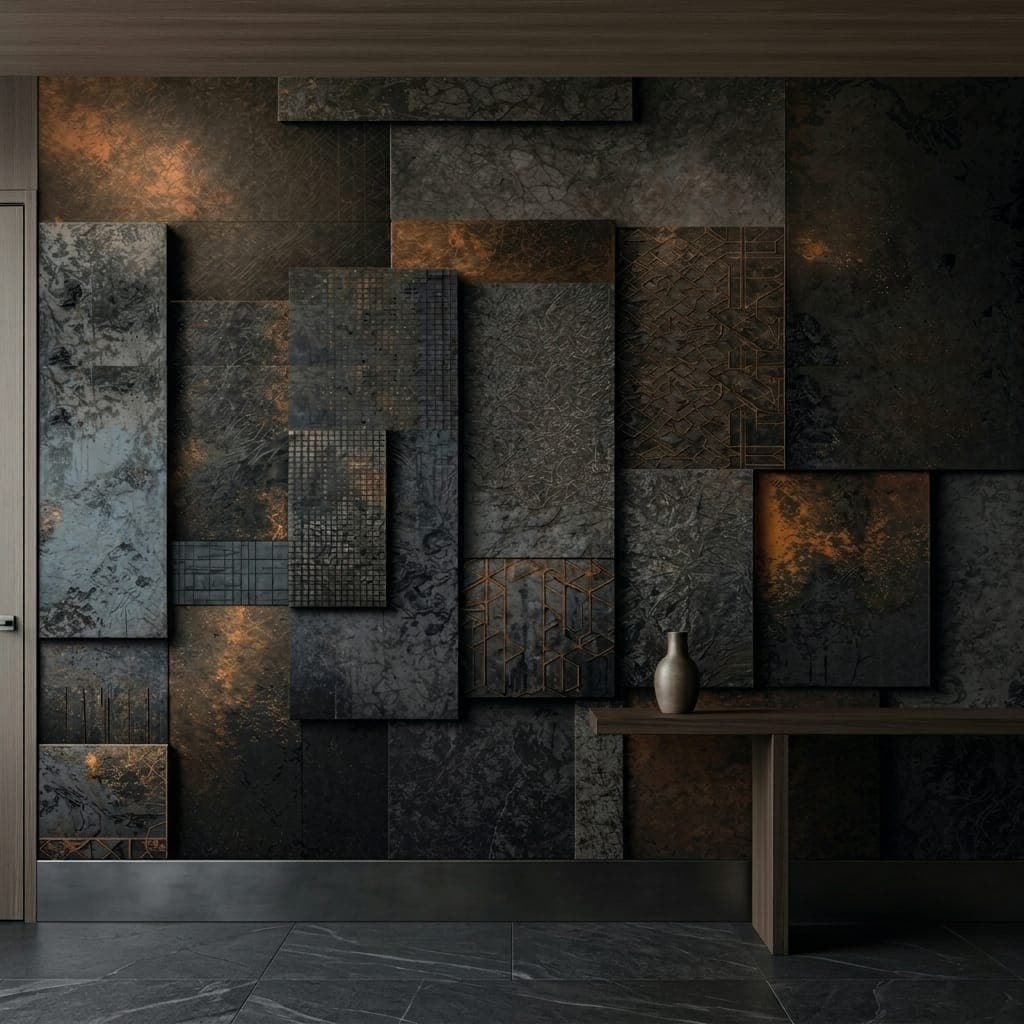
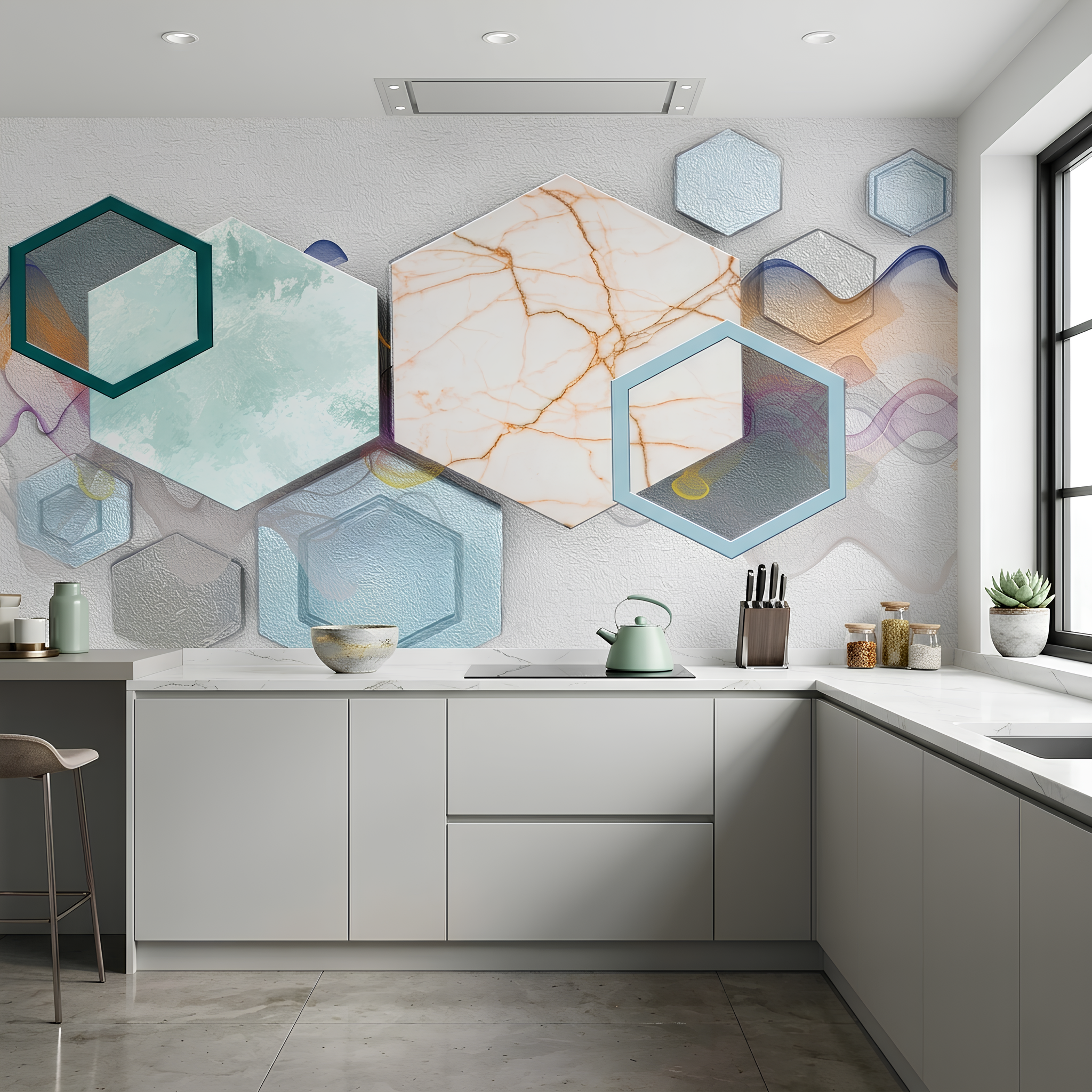
Marble Look
Calacatta white makes a small bathroom feel bigger, while green Verde and black Marquina lend a luxury-hotel air. At a tenth of the cost of real marble — see the comparison in the stone-pattern guide.
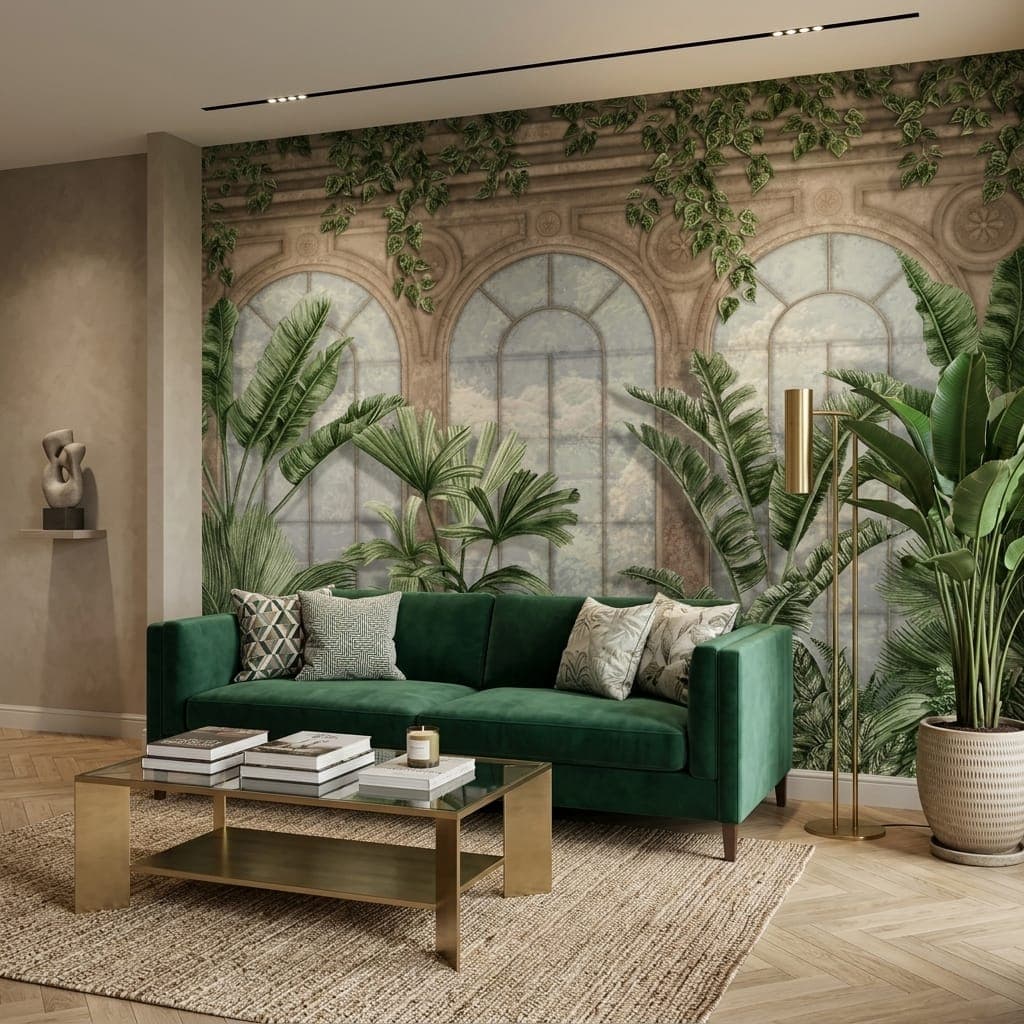
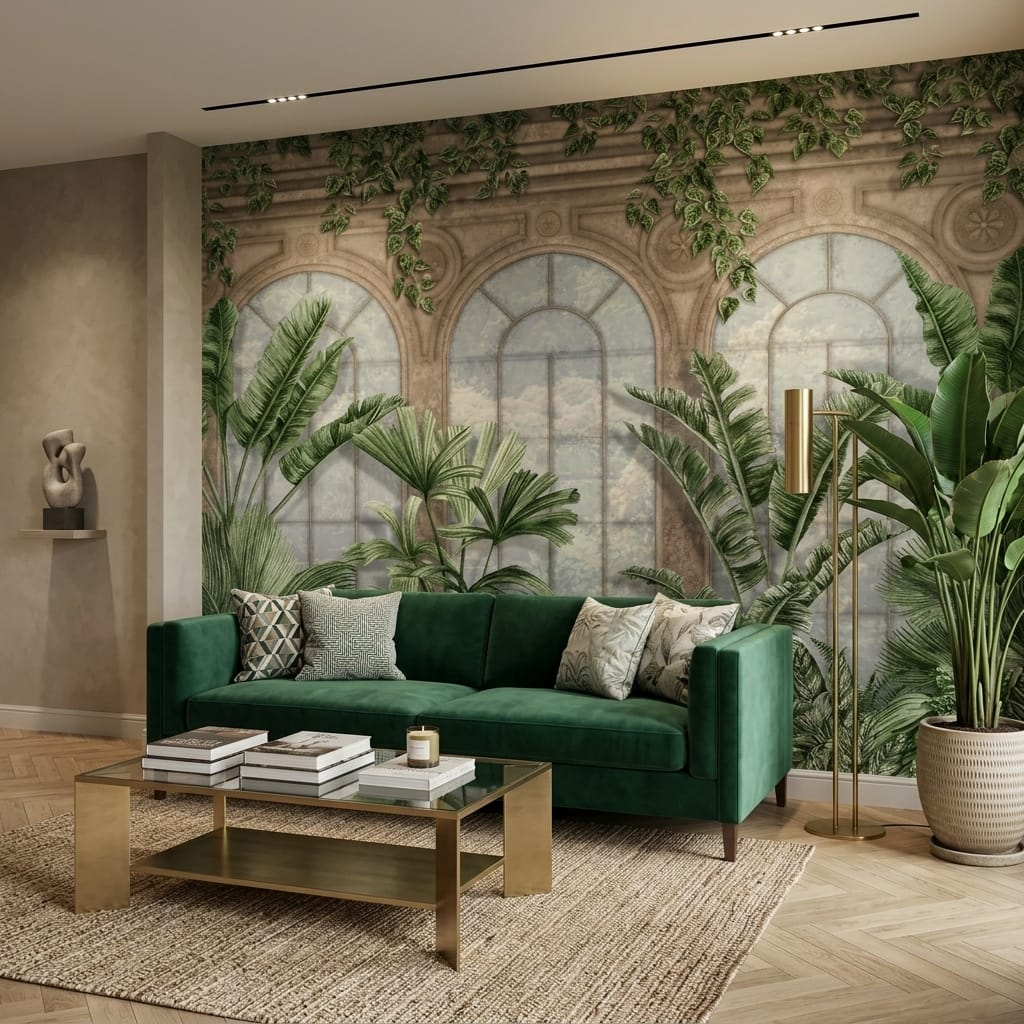
Dark Botanical
Tropical leaves on a deep-green background create contrast with white sanitaryware; that's the formula behind the "boutique hotel bathroom" effect.
Vintage Tile and Encaustic Patterns
Ottoman ceramic and patchwork tile looks deliver a nostalgic effect without the cost of real tiling work. Browse the vintage collection.
Abstract Water and Wave Textures
Blue-green gradients and fluid patterns suit the nature of a bathroom and remain easy on the eye even in a small space.
Preventing Mould and Bubbling: 4 Golden Rules
- A ventilation routine: 10 minutes of window or extractor fan after a shower. That's the only thing that breaks condensation.
- Seam discipline: Seams must be pressed down firmly during installation; vapour gets in through the weakest seam. See the roller technique in the application guide.
- A silicone line: Running a thin bead of clear silicone along the bottom edge where the paper meets the tile or basin stops water from creeping in.
- A monthly check: Run your hand over the corners and seams; if any lifting has started, early action is a five-minute job. Cleaning rules are in the maintenance guide.
Patterns That Make a Small Bathroom Look Bigger
The average bathroom in Turkey is 4-6 m², so pattern choice is usually a "small space" problem. Three tactics prove themselves in the field: light-ground patterns with a vertical rhythm raise the ceiling, a single deep composition on one wall (a lush garden, an open sky) creates a window effect, and a pattern placed opposite the mirror doubles the space through its reflection. What to avoid is just as clear: in a small bathroom, a dark ground combined with a busy motif makes the walls close in on you. The full set of tactics is in the space-expanding guide.
Renovating a Bathroom in a Rental
The bathroom is the area tenants are most hesitant to touch, yet it makes the biggest difference once they do. Self-adhesive film is ideal here: it goes over tiles (if the grout lines have been levelled with silicone) or over a painted upper wall, and peels off with a bit of heat when you move out. A 3-4 m² basin-and-upper-wall area runs 2,850-3,800 TL and transforms in a single Saturday afternoon. The steps are in the peel-and-stick guide, and the deposit strategy is in the renters' guide.
Can You Apply Wallpaper to a Bathroom Ceiling?
Technically yes, in practice be selective. The ceiling is the first surface where condensation gathers; we only recommend it in bathrooms with a powerful extractor and a sound ceiling (no sagging or damp marks). Cloud and sky patterns on the ceiling give a striking result in guest bathrooms — since the shower sees little use, the condensation load is low too. In a main bathroom, leaving the ceiling to a wipeable paint and giving the character to the walls is the longer-lasting decision.
Doing the Basin Wall: A 45-Minute Summary
The most popular bathroom project is a single basin wall, and the process is short: the mirror and shelf come off (15 min), the wall is wiped down and dried, the film is applied top to bottom with a squeegee (20 min), the edges are trimmed with a craft knife and a thin bead of silicone is run along the bottom edge (10 min). The next day the mirror goes back up — screw holes can be drilled through the paper without the edges tearing. The one critical point: run the silicone gun on the grout with the narrow tip, not on the paper.
If Ventilation Is Weak: Practical Fixes
In windowless bathrooms with a weak extractor, boost the ventilation before the paper; that investment is cheaper than the paper. If your current extractor's output is below 90-120 m³/h, a new one runs 300-600 TL and changes the moisture problem at the root. A hygrometer (moisture meter) is a small 100-200 TL insurance policy: if the bathroom's humidity drops below 60% during the day, your walls are ready for paper; if it stays above 70% constantly, ventilation first, decoration second. These two small steps render the "paper is risky in a bathroom" cliché invalid for your bathroom.
Matching Colour with the Mirror, Cabinet and Fittings
Because the bathroom is small, every element is read side by side with the pattern. The safe trio is this: repeat the pattern's ground tone on the cabinet door and the pattern's accent colour on the towels; fix the fittings and mirror frame to a single metal. White-grey marble patterns work best in modern bathrooms with black fittings, while green botanicals and midnight-blue grounds work best in bathrooms with gold/brass details. White sanitaryware already gets along with every pattern — use your courage on the wall, not on the fixtures.
The Guest Bathroom: Where the Boldest Experiment Belongs
Being cautious in the main bathroom makes sense; the guest bathroom/toilet, on the other hand, is the freest wall in the house. The small footprint (2-3 m²) lowers the cost of bold patterns, the short usage time doesn't tire out a busy print, and its impact per square metre on a guest is the highest in the house. Dark-ground chinoiserie, dramatic dark florals, or witty illustrative patterns — anything that would feel "too much" in another room finds its place here. This is exactly the interior designers' "powder room" tradition, and with digital printing it's now open to everyone.
The Order for Starting a Bathroom Project
Let's turn this article into an action plan: first take a week's humidity reading with a hygrometer; if you're seeing under 60%, choose your wall (excluding the shower run); settle on a wipeable film base; do the colour test with a sample under the bathroom's artificial light — since bathrooms get little daylight, this test is more critical than in other rooms; take the measurements, plan the silicone for the bottom edge, and apply. Follow this order and the bathroom becomes the room that changes fastest, and for the least money, in the whole house.
Frequently Asked Questions
Does wallpaper go mouldy in a bathroom?
With the combination of a wipeable surface and regular ventilation, in practice no. The source of mould cases is almost always condensation without ventilation or a leak inside the wall.
Can you put paper next to the shower enclosure?
No to any surface where water splashes directly. Leave at least 30-40 cm between the paper and the enclosure glass/wall, or leave that strip as tile.
How much does bathroom wallpaper cost?
Because bathrooms are small, it's the most economical makeover: a 3-4 m² basin wall is in the 2,850-3,800 TL range (film). For the price list: price guide.
Does wallpaper stick over tiles?
On a flat, grout-free surface, self-adhesive film holds; on deeply grouted tile, the grout lines show through the surface — you need to level it with a thin filler first. For the details write to us and we'll assess it from a photo.
Do the same rules apply to the kitchen?
Largely yes; the kitchen-specific guide: kitchen wallpaper.
How many years does paper last in a bathroom?
With the combination of the right material (wipeable film/vinyl) and regular ventilation, 5-8 years is a realistic expectation; on dry-zone walls that stretches to 10 years. The only thing that shortens its life is chronic condensation — tracking with a hygrometer and a habit of ventilating after a shower tip the timeline in your favour.
From our shop
Wallpapers You Might Like
3D White Stone Brick Textile Wallpaper
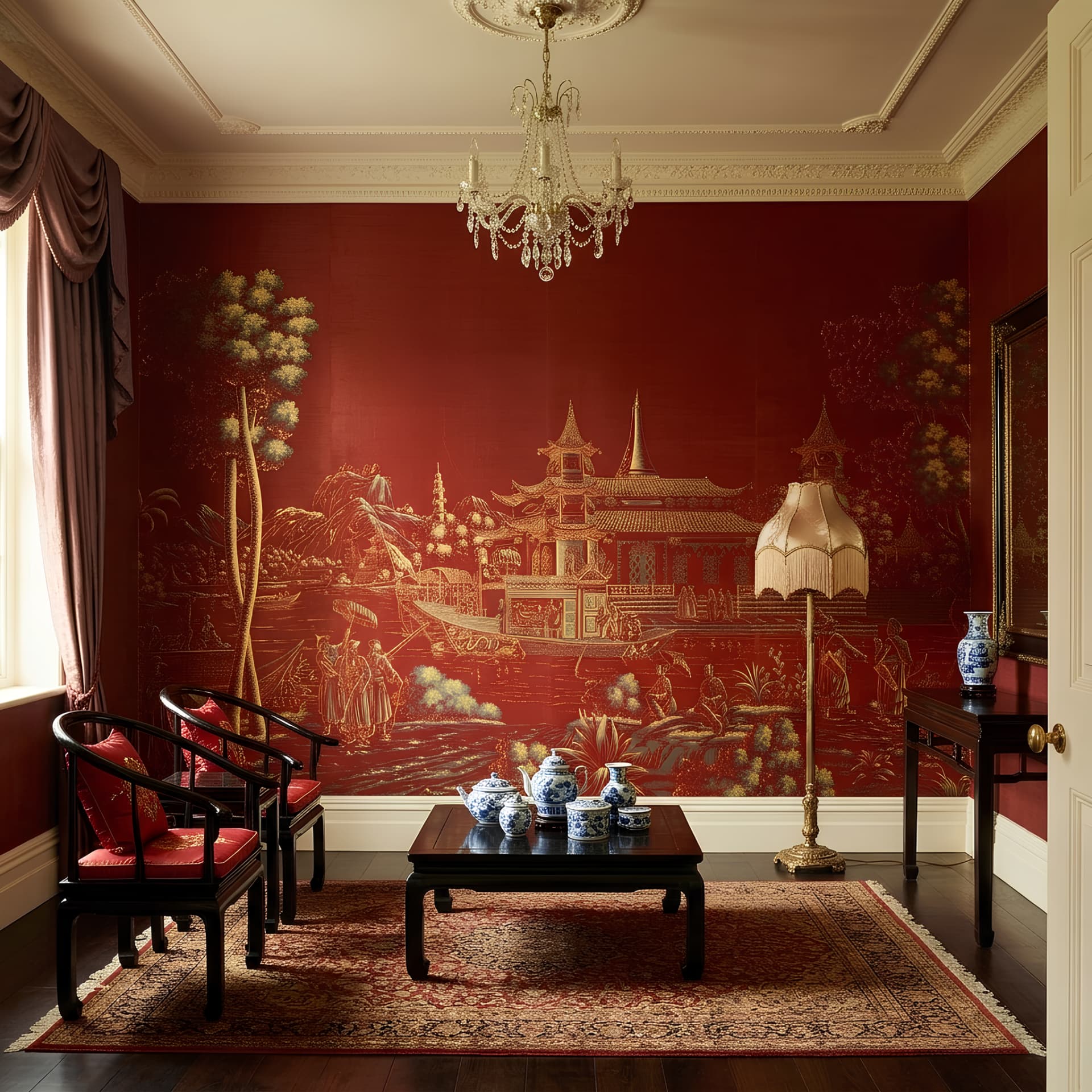
Classic Chinese Motif Burgundy Wallpaper
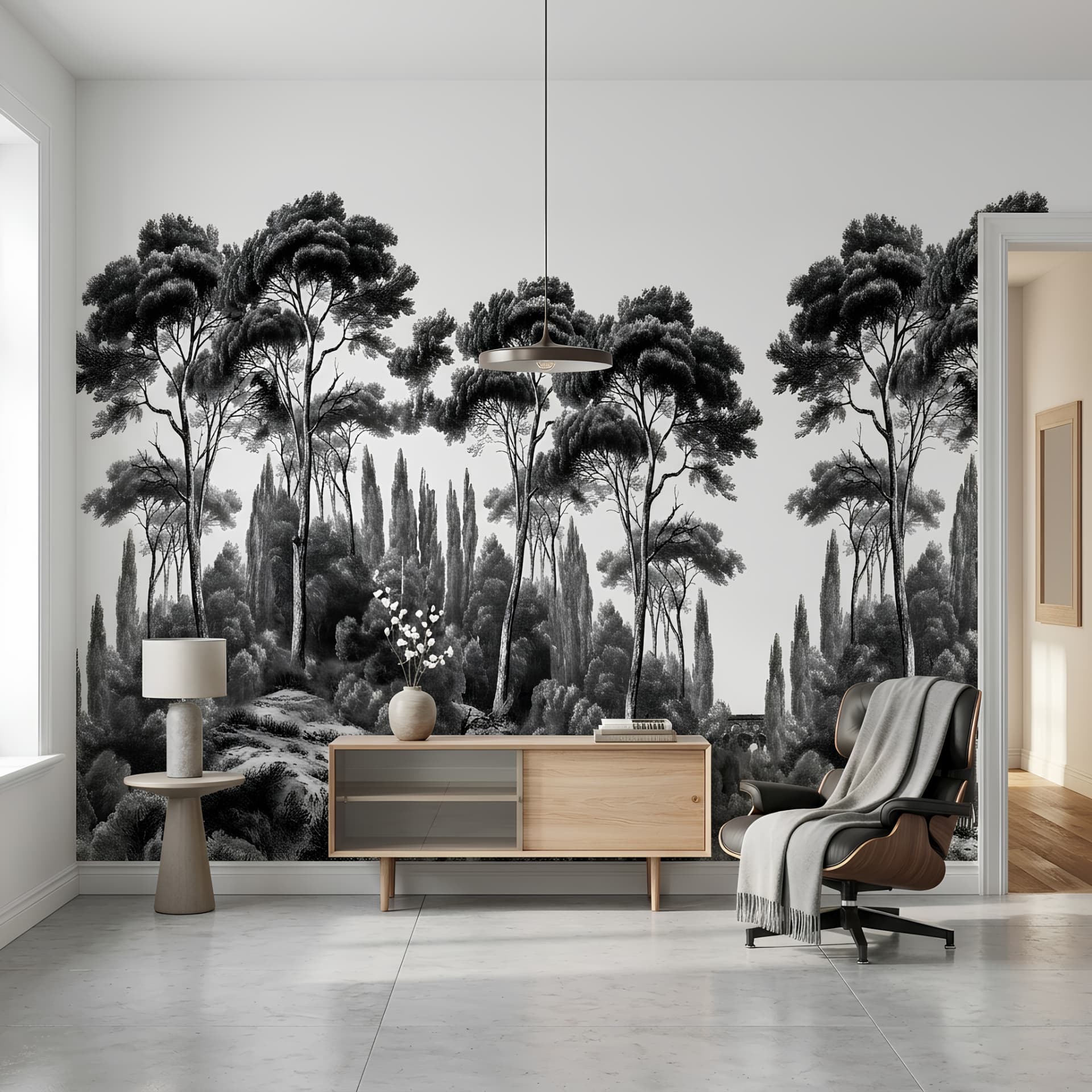
Black & White Vintage Forest Wipeable Wallpaper
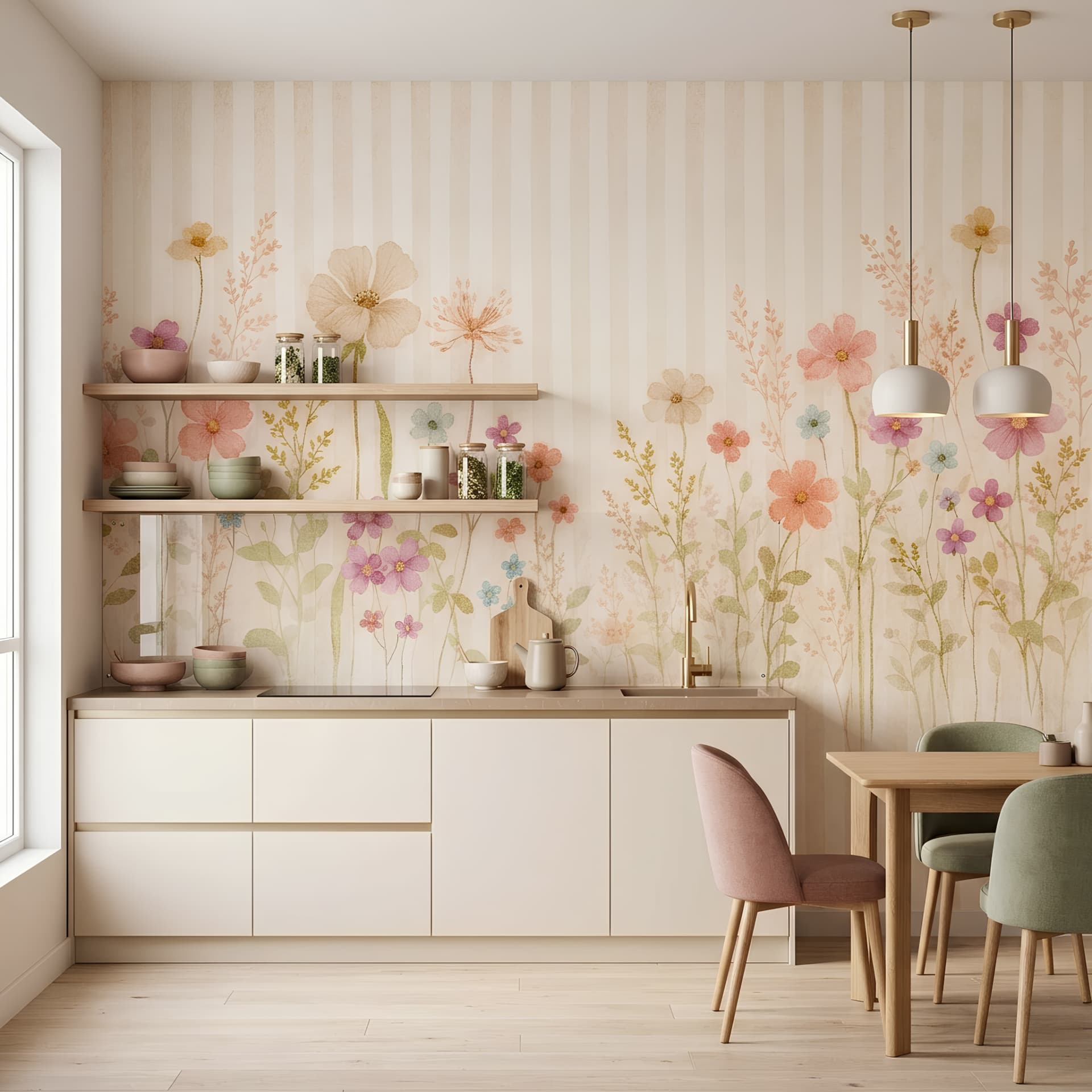
Pastel Spring Garden Striped Wallpaper
DA
Dekoartizan Tasarım Ekibi
Duvar kağıdı sektöründe uzmanlaşmış tasarım ve içerik ekibimiz, iç mekan dekorasyonu, malzeme bilgisi ve uygulama teknikleri konusundaki birikimlerini bu rehberlerde paylaşıyor. Tüm içerikler saha deneyimi ve güncel sektör verileriyle desteklenir.
İçeriklerimiz saha deneyimi ve sektörel uzmanlığa dayanır
bathroom wallpapermoisture-resistant wallpaperpeel and stick bathroommarble wallpaperwaterproof wall covering