Loading article…
ceiling wallpaperfifth wallsky ceiling mural
Ceiling Wallpaper: Designing the Fifth Wall
The ceiling is the "fifth wall" — the surface most homes ignore, yet the right pattern transforms a room. Sky, fresco and geometric ceiling designs plus a fitting guide.
D
By Dekoartizan Tasarım Ekibi··6 min read
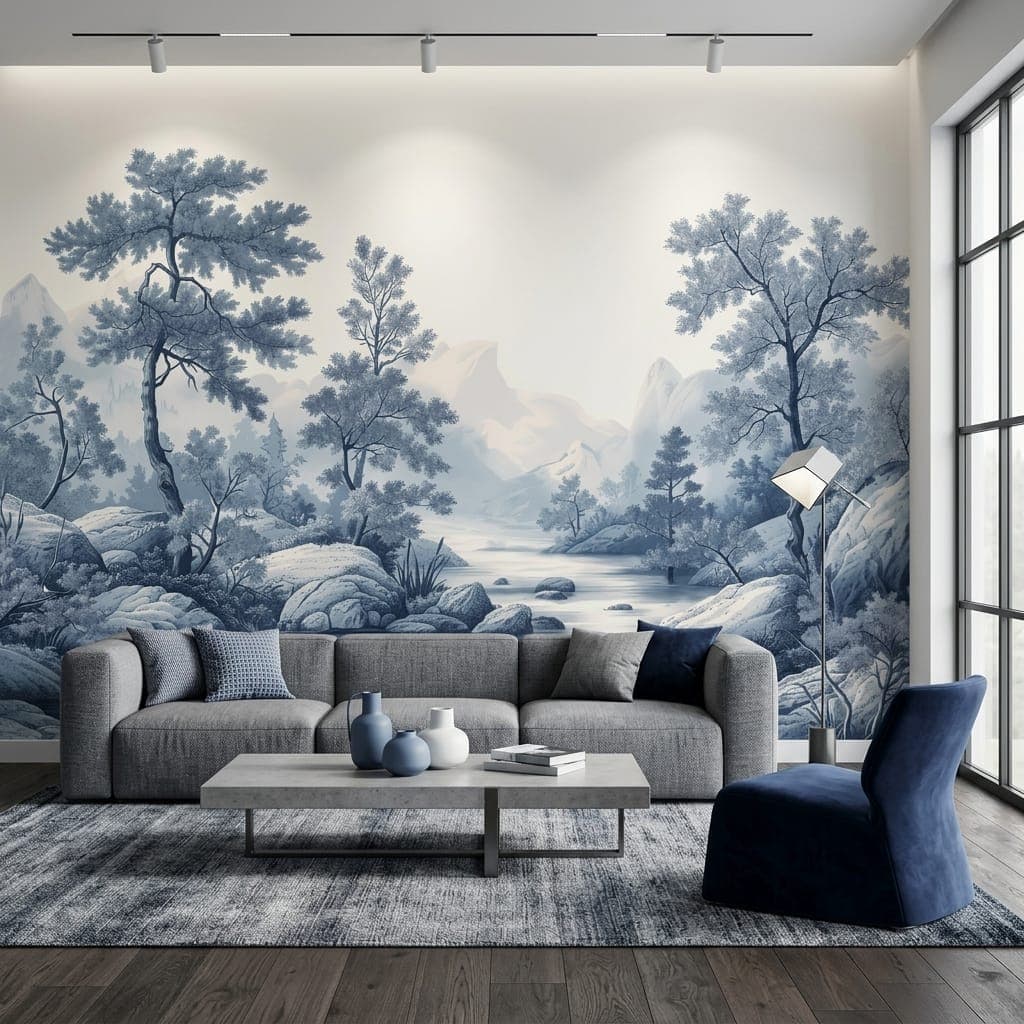
Yes, you can wallpaper a ceiling too — ceiling wallpaper is decoration's most underused move; designers call this surface the "fifth wall". The best-loved ceiling themes are sky and clouds, classic fresco (a Renaissance-ceiling effect), geometry and a timber look.
Ceiling work is harder than a vertical wall — you fight gravity, and it takes two people — which is why we recommend a non-woven or self-adhesive base for ceilings, and professional installation in most cases. Done well, it lifts a low ceiling and gives a bedroom "a sky to sleep under".
Why Choose Ceiling Wallpaper? The "Fifth Wall" Logic
Dressing your walls and leaving the ceiling bare is like leaving a quarter of a painting unpainted. A ceiling design does three things:
- Draws the eye up: Even in a sparsely furnished room, a ceiling pattern creates the feeling of a "designed space".
- Manages architectural flaws: A light colour plus a horizon pattern lifts a low ceiling; a dark pattern brings an overly tall ceiling down to a more intimate scale.
- Sets identity in one move: Even if the walls stay plain, the ceiling becomes the room's signature — a budget-friendly "wow".
Pattern Families for the Ceiling
| Theme | Effect | Best room |
|---|---|---|
| Sky / clouds | Airiness, height; an "outdoor" feel | Bedroom, children's room |
| Classic fresco | Renaissance ceiling painting, showy elegance | Living room, dining room, entryway |
| Geometric | Rhythm and depth; a modern character | Study, modern living room |
| Timber / coffered look | Warmth, an architectural "coffered ceiling" effect | Rustic living room, dining area |
| Star / galaxy | Dreamy, calming night effect | Child and baby room |
Sky and fresco themes pair with the concepts in the living room and bedroom guides; geometric ceilings work well with the textured / 3D ranges.
Which Room, Which Ceiling?
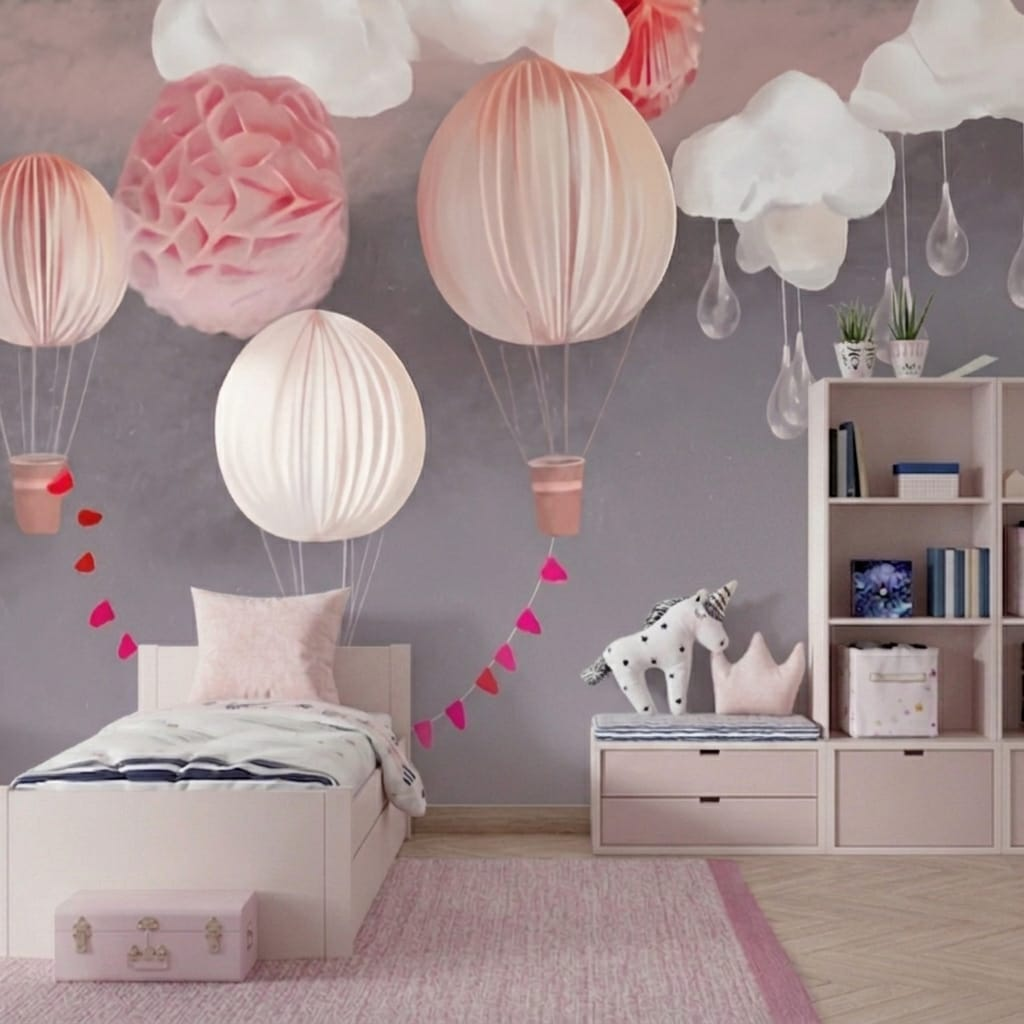
- Bedroom: A sky or soft clouds seen from the pillow; since this is the surface you look at as the day ends, it is the most sensible ceiling to invest in.
- Children's / baby room: A star-galaxy or cloudy sky; a calm night theme that supports the sleep routine. Children's room guide.
- Living / dining room: A classic fresco or geometric; combined with a chandelier it creates a "feature ceiling" effect.
- Entryway / hallway: In a small area, a bold ceiling pattern delivers the most impact for the least risk.
Fitting: Why Is a Ceiling Harder?
A ceiling is different from a vertical wall because you work against gravity. Here is what you need to know:
- Two people are essential: One carries and positions the paper, the other smooths it with a squeegee. Do not take on ceiling work alone.
- Choosing the base: A lightweight non-woven or self-adhesive base is ideal; a heavy-duty vinyl adhesive is used so the paste holds well overhead. Base types are in the wallpaper types guide.
- Surface prep: The ceiling must be dust-free, crack-free and primed; on a plasterboard ceiling, primer adhesion is critical.
- Professional fitting recommended: Don't let your first job be a ceiling. Fitter rates and installation-included orders are in the installation guide; the general technique is in the application guide.
The Relationship with Lighting
A ceiling pattern should be designed together with the lighting. Spotlights strengthen the play of shadow and depth on geometric and textured ceilings; on sky themes, soft indirect (strip) lighting gives a "glowing sky" effect. If there is a chandelier, a fresco / classic ceiling pattern frames it. Glossy-surface bases reflect light and brighten the room, while matte bases look more cinematic.
Price
The per-m² price of ceiling paper is the same as the wall: 850-1,050 TL/m² (2026). The difference is in the labour — ceiling installation is charged 25-50% higher than a vertical wall. Work out the total budget with the price guide and the m² calculation.
Ceiling Colour and the Psychology of Space
The ceiling is the surface where the gaze rests; its colour and pattern directly change how the room is perceived:
- Light ceiling (sky blue, cream, soft cloud): Pushes the ceiling "back" so the room reads as high and airy. The first choice for flats with low ceilings.
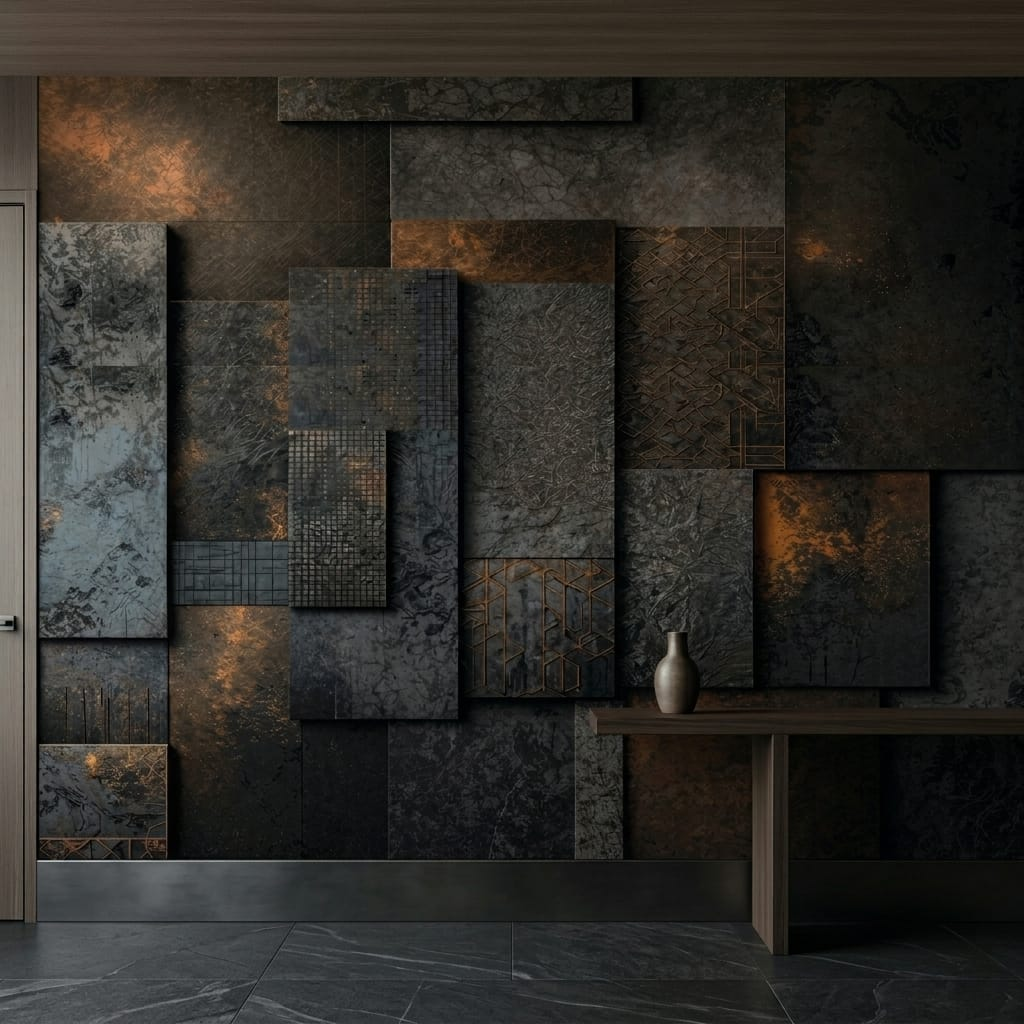
- Dark ceiling (navy, anthracite, night theme): Pulls the ceiling "closer", making an overly tall space more intimate; gives an enveloping effect in a bedroom or home cinema.
- Warm-cool balance: In north-facing rooms that get little sun, a warm-toned ceiling (cream, peach) warms the room; in a room with excessive light, a cool ceiling restores balance.
Step by Step: How to Apply Wallpaper to a Ceiling
- 1. Surface prep: Clear the ceiling of dust, fill cracks with filler, apply primer (primer is essential on a plasterboard ceiling).
- 2. Measuring and a reference line: Mark a straight starting line on the ceiling; the alignment of the first strip sets the whole job.
- 3. Cutting: Cut the strips with a 5-10 cm allowance; a non-woven base is the easiest to work with overhead.
- 4. Adhesive: Apply heavy-duty vinyl paste to the ceiling (the paste-the-wall method); shut off any draughts.
- 5. Positioning and squeegee: One person carries, the other works the air out from the centre to the edges with a squeegee. This step is not a one-person job.
- 6. Edges and drying: Trim the excess with a utility knife and let it dry draught-free for 24 hours.
For the general technique see the application guide; if a ceiling will be your first job, see the installation guide for fitter support.
3 Common Ceiling Mistakes
- Working alone: A ceiling is a two-person job; on your own the paper folds and traps air.
- The wrong adhesive: A "general-purpose" light paste won't hold on a ceiling; use a heavy-duty vinyl adhesive.
- Unprimed plaster: Wallpaper on an unprimed plaster ceiling sags over time; primer is the guarantee of adhesion.
Frequently Asked Questions
Can you put wallpaper on a ceiling?
You can, and it is becoming more popular. With a non-woven or self-adhesive base, a heavy-duty vinyl adhesive and a two-person application, a ceiling can be covered safely; professional installation is recommended for a first attempt.
Which pattern raises a low ceiling?
A light-coloured sky/cloud or a light geometric pattern with a vertical rhythm lifts the perspective. Dark, large patterns are used instead to make a tall ceiling feel more intimate.
Will ceiling paper fall or sag?
With the right base, the right adhesive and a prepared surface, no. Lightweight non-woven bases hold their shape on a ceiling for years; problems usually come from an unsuitable adhesive or an unprimed surface.
How long does a ceiling installation take?
A single-room ceiling on a prepared surface takes 3-5 hours. A draught-free 24-hour cure is required. The rate is 25-50% higher than a wall; details are in the installation guide.
From our shop
Wallpapers You Might Like
3D White Stone Brick Textile Wallpaper
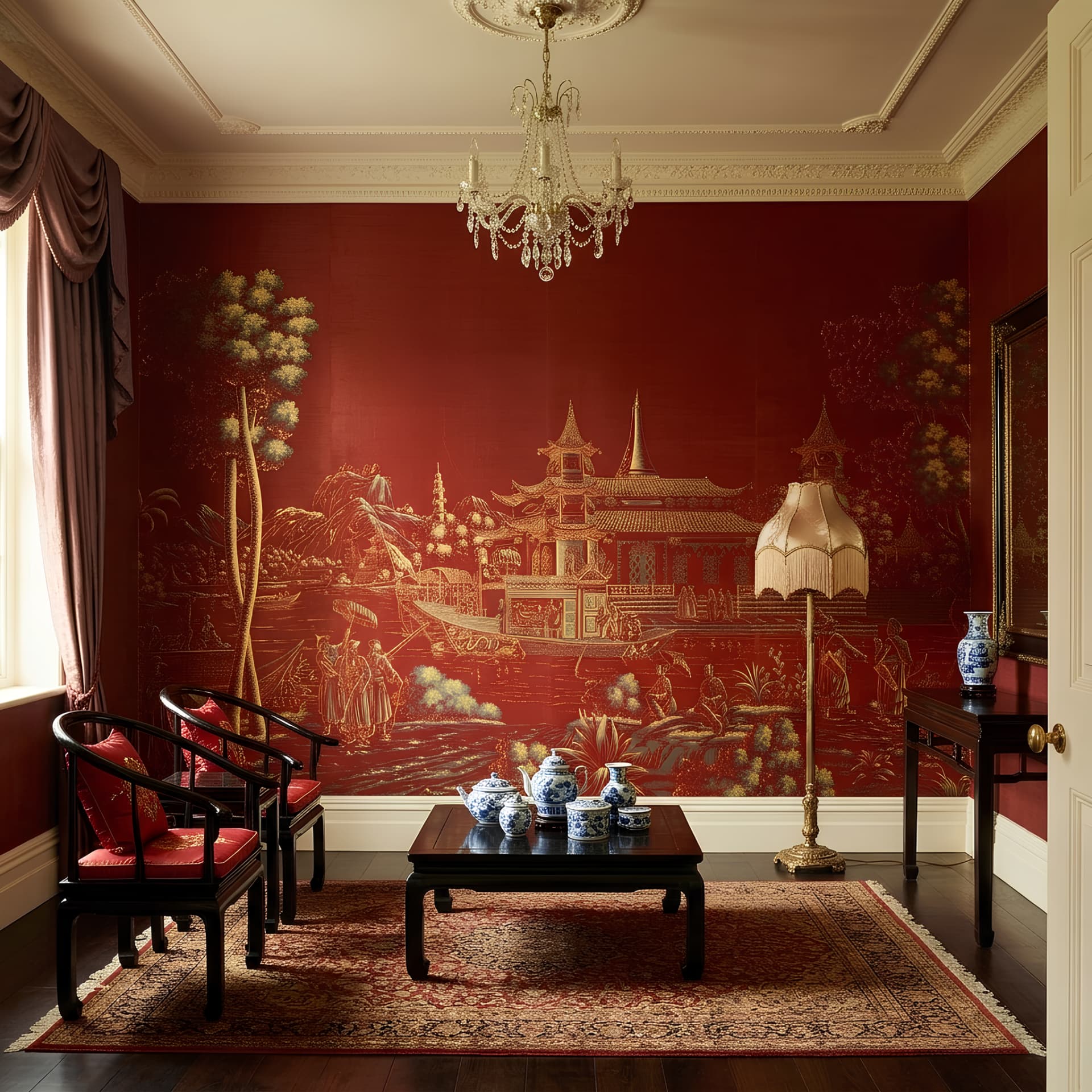
Classic Chinese Motif Burgundy Wallpaper
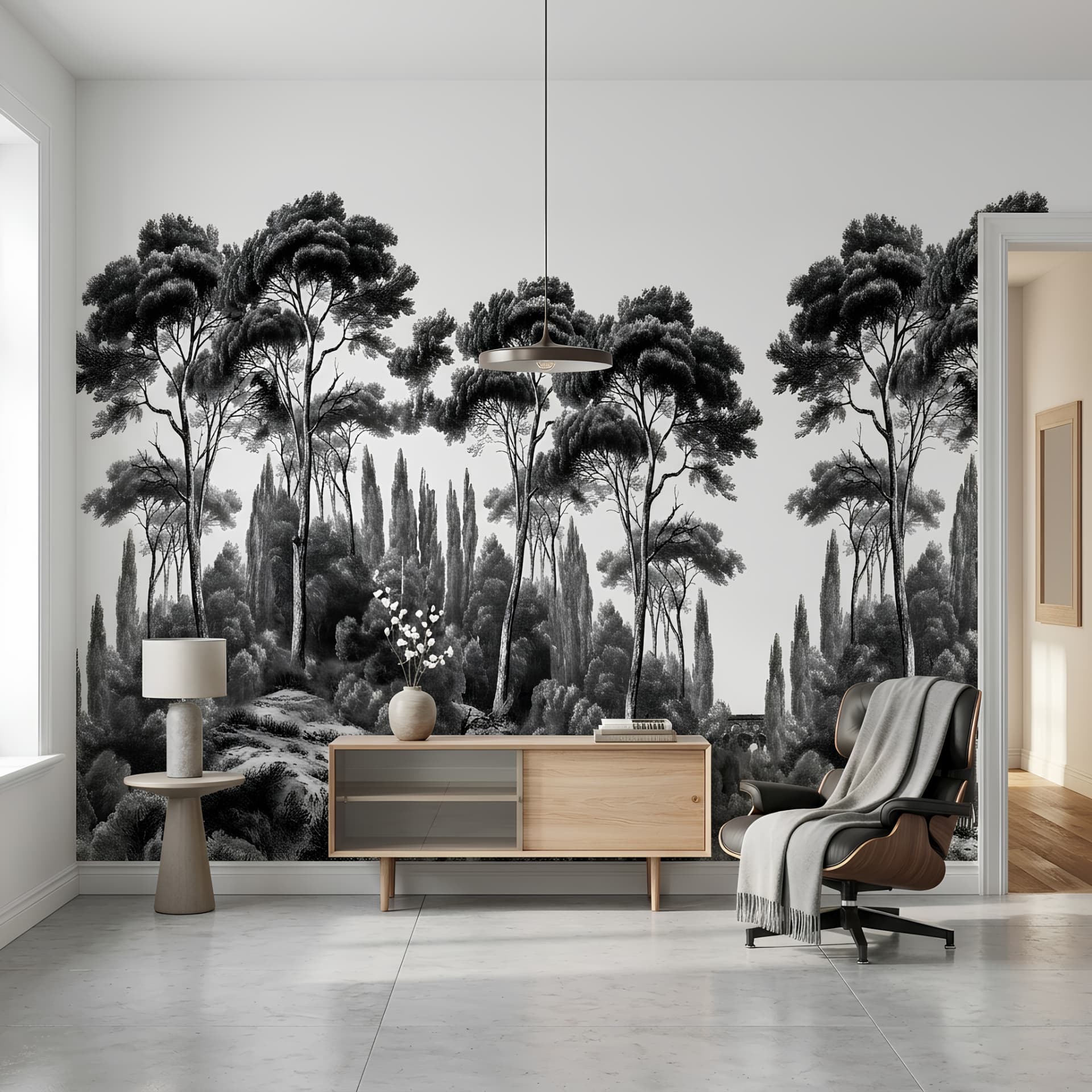
Black & White Vintage Forest Wipeable Wallpaper
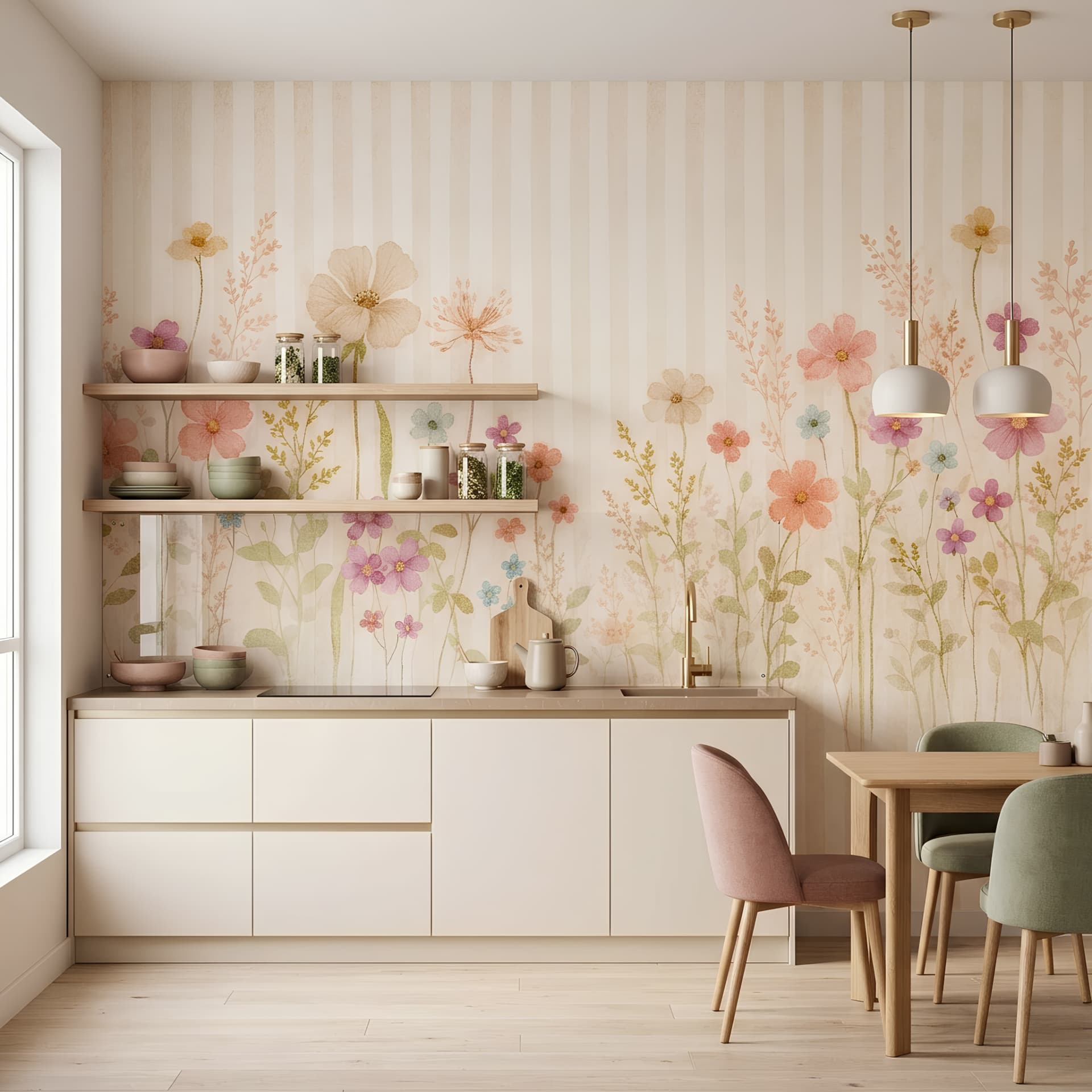
Pastel Spring Garden Striped Wallpaper
DA
Dekoartizan Tasarım Ekibi
Duvar kağıdı sektöründe uzmanlaşmış tasarım ve içerik ekibimiz, iç mekan dekorasyonu, malzeme bilgisi ve uygulama teknikleri konusundaki birikimlerini bu rehberlerde paylaşıyor. Tüm içerikler saha deneyimi ve güncel sektör verileriyle desteklenir.
İçeriklerimiz saha deneyimi ve sektörel uzmanlığa dayanır
ceiling wallpaperfifth wallsky ceiling muralfresco ceilingceiling decor ideasgeometric ceiling