Loading article…
floral wallpaperdark floral wallpaperbotanical wallpaper
Floral Wallpaper: Bold Blooms, Botanical & Vintage Designs
The 2026 floral wallpaper trend: oversized blooms on dark grounds. A pattern guide for the bedroom, living room and kitchen.
D
By Dekoartizan Tasarım Ekibi··8 min read
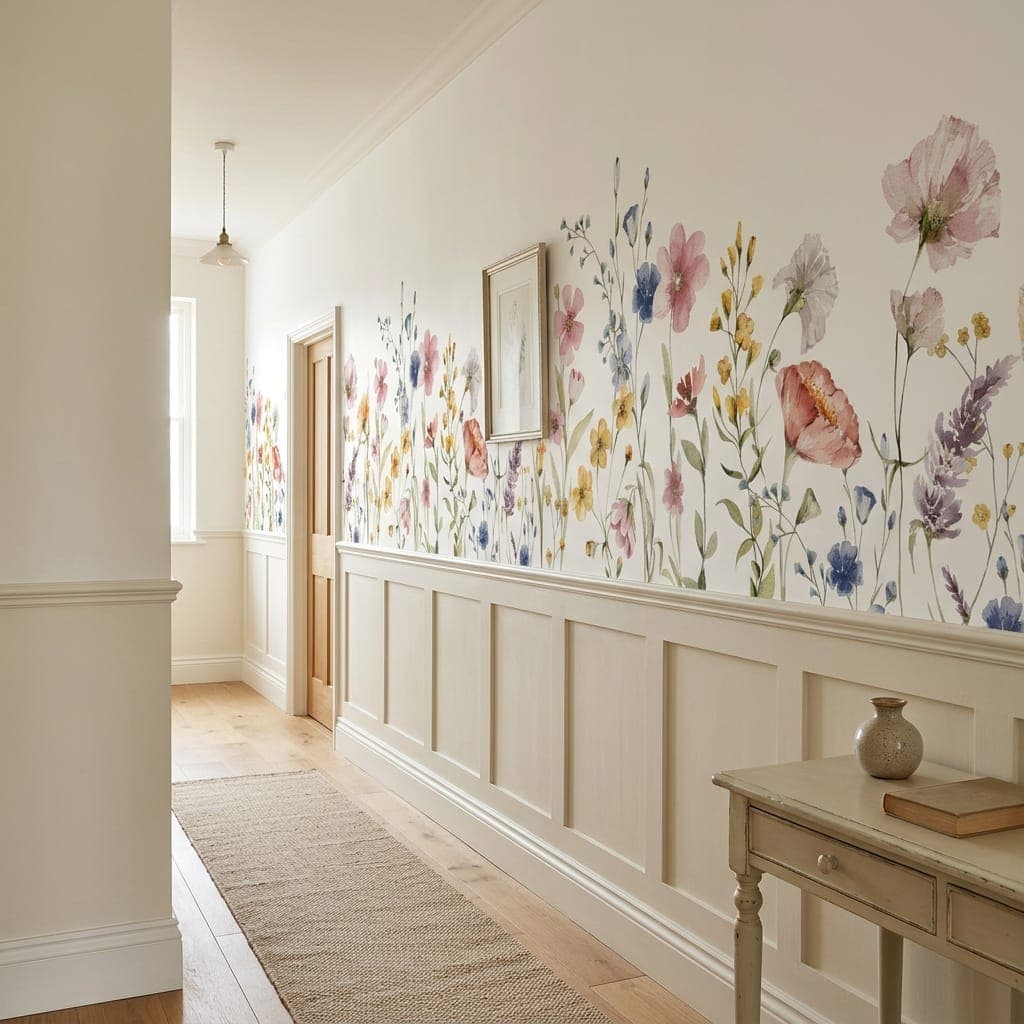
The runaway leader in floral wallpaper for 2026 is the oversized bloom on a dark ground: roses and peonies rendered at a surreal scale over navy or charcoal. Close behind come soft watercolour botanicals, vintage rose prints and chinoiserie flowering branches.
There is only one golden rule when choosing: scale. Big room, big flower; small room, small and sparse pattern. Get that balance right and a floral lifts the room rather than smothering it.
2026 Floral Wallpaper Trends
Dark Floral: Oversized Blooms on a Dark Ground
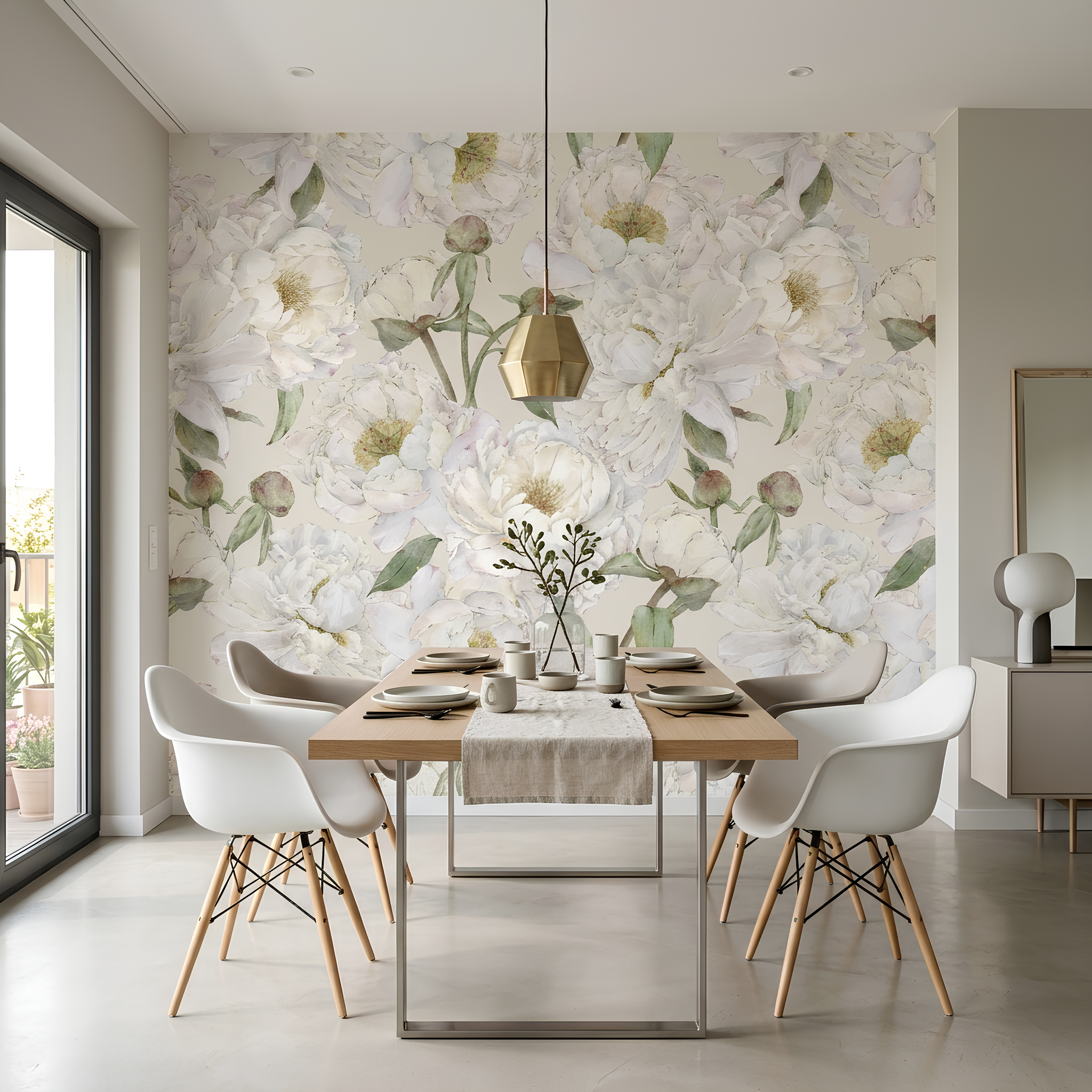
A firm favourite for the headboard wall, three years running. A dark ground lends dramatic depth, and the large blooms create a "wall-as-artwork" effect. It is most often used in the bedroom and in boutique-hotel projects.
Soft Botanicals and Watercolour
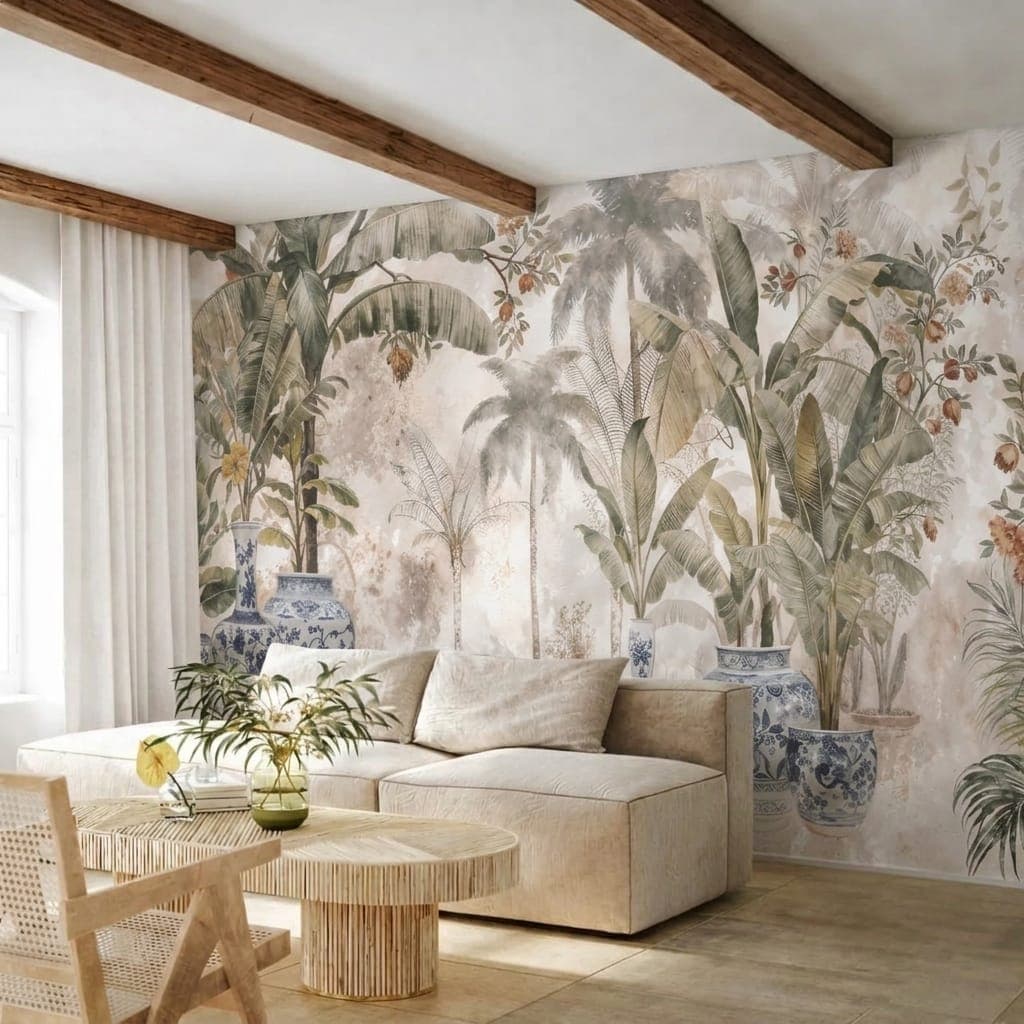
Faded floral branches on a powder-beige ground: the favourite for calm bedrooms and girls' teen rooms. A safe choice in small rooms too, in line with the light-ground rule from our space-expanding guide.
Vintage Rose and English Garden
Nostalgic rose bouquets and cottage-style patterns sit naturally with classic furniture. The engraved floral series in our vintage collection belong to this family as well.
Chinoiserie: Flowering Branches and Birds
Hand-painted-look branch-bird-flower compositions; the most refined way to signal a "considered home" in dining rooms and entryways.
Single Bloom / Macro Composition
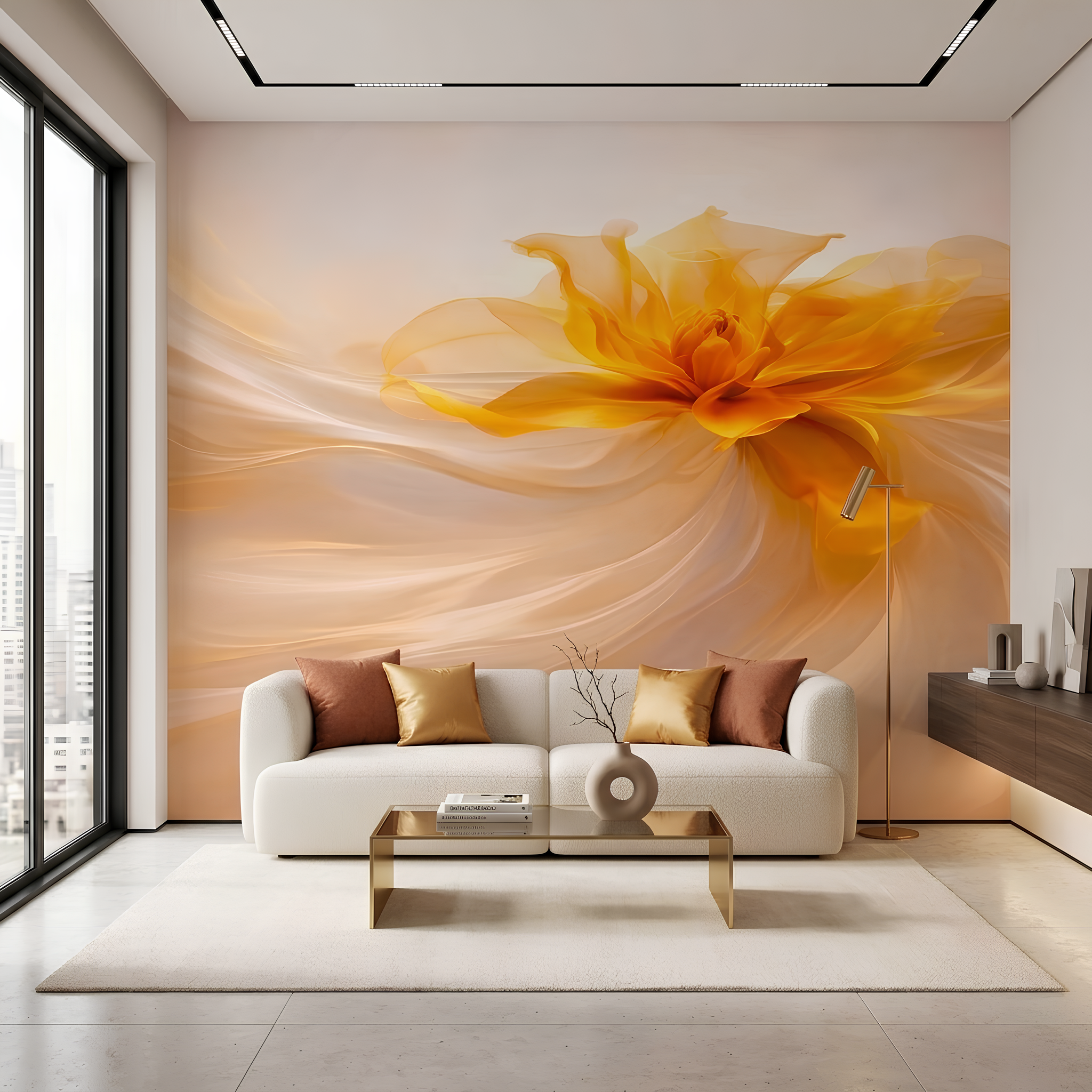
A single wall-height peony or magnolia — modern and bold, in the spirit of a wall poster. With made-to-measure printing, the flower's focal point is positioned to suit your wall.
Floral Styles at a Glance
| Floral style | Character | Best room | Motif scale |
|---|---|---|---|
| Dark floral (oversized blooms) | Dramatic, artwork-like | Bedroom / feature wall | Large, wall-height |
| Soft watercolour botanical | Calm and airy | Bedroom, small rooms | Small–medium |
| Vintage rose / English garden | Nostalgic, cottage | Guest room, dining | Small repeat |
| Chinoiserie (branch and bird) | Refined, hand-drawn | Dining, entryway | Medium |
| Single bloom / macro | Modern and bold | Living-room feature wall | Wall-height |
Floral Patterns by Room
- Bedroom: Dark floral (behind the bed) or soft botanical (all walls). Romantic-concept examples in the guide.
- Living room: A large bloom on a single feature wall; flowers on all four walls create a "sweet-box" effect. The living-room guide suggests pairings.
- Kitchen / dining area: Spring-garden and fruit-and-flower mixed patterns; a wipeable base is essential along the counter line — see the wipeable wallpaper guide.
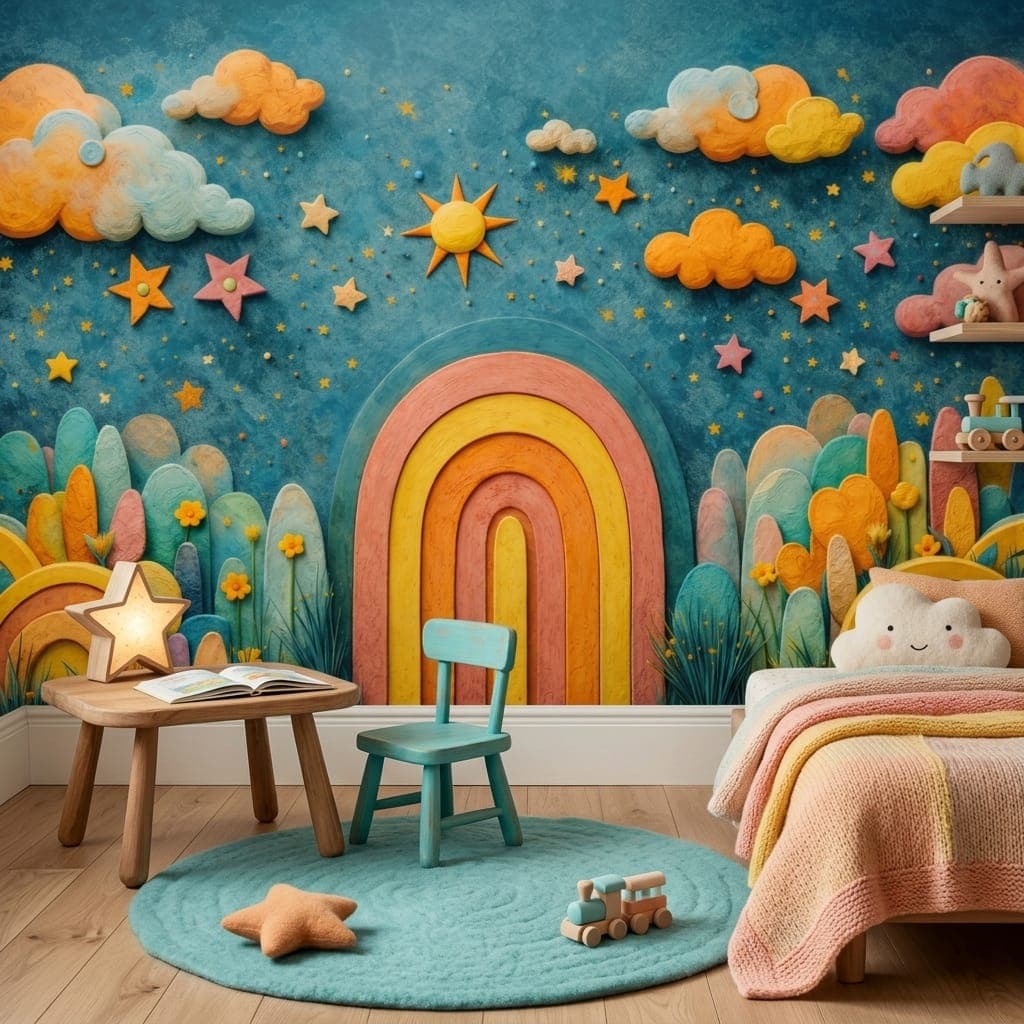
- Children's room: Pastel flower and cloud combinations; age-by-age suggestions in the children's room guide.
- Bathroom: Dark botanical against white sanitaryware — the favourite formula of our bathroom guide.
Scale and Colour: 3 Practical Rules
- Scale: The larger the floral motif, the more the room feels shrunk; in rooms under 12 m² keep the motif diameter under 30–40 cm. With made-to-measure printing we scale the pattern to your room — an advantage you won't find on off-the-shelf rolls.
- Colour linking: Echo the pattern's secondary colour (leaf green, ground tone) in curtains or cushions; the room "pulls together".
- Samples: Floral patterns are the category where the screen-to-print colour difference is felt most; request a sample before ordering.
Matching Floral Patterns to Furniture Style
In almost every floral-wallpaper project that goes wrong, the problem isn't the pattern — it's the pattern-to-furniture match. Modern, clean-lined furniture is balanced by large-scale, low-colour florals; country/cottage timber furniture blends with small rose prints; classic lacquered and carved suites call for chinoiserie and damask-rooted compositions. In Japandi and minimalist interiors, the flower has to be rendered in purely linear (line-art) terms — a realistic rose pattern jars in those styles.
The practical rule: the more ornate your furniture, the calmer the pattern must be. If both speak at once, the room never rests.
Curtains, Rug and Cushions: The Three-Point Linking Technique
The standard formula interior designers use with a floral wall has three steps. Repeat the pattern's ground colour in the curtain (same family, not a contrast); recall the pattern's most dominant flower colour in two or three cushions; and leave the rug entirely neutral. Without this trio, even the most beautiful dark floral feels like "the wall is one thing, the room another". At the sample stage, placing your fabrics beside the sample and photographing them in daylight is the cheapest way to test this harmony before ordering.
From Damask to Dark Floral: A Short History of the Pattern
Floral-pattern fashion is cyclical. The woven damask of the 1700s turned into art with William Morris's hand-printed botanicals in the 1860s; the 1970s brought small-repeat "grandmother roses", and in the 2010s Scandinavian minimalism all but killed the flower. The dark-floral wave was born after 2018 with the large-scale freedom of digital printing — a single wall-height composition instead of a repeating motif. That is why the answer to "is floral wallpaper dated" lies in scale: the smaller the motif, the closer to the past; the larger, the closer to today.
Three Schemes from the Field
To spark ideas, three real projects we delivered recently: in a walnut-furnished bedroom in Kadıköy, a peony composition on a burgundy ground plus linen curtains; in an open plan with a white kitchen in Ümraniye, a spring-branch pattern on the dining-area wall; in a living room with grey sofas in Ataşehir, a watercolour botanical on a powder ground. What all three share: the pattern on a single wall, the remaining surfaces painted in the pattern's ground tone. For similar schemes you can browse on from the designs guide.
Seasonal Perception: Florals in Summer and Winter
The most justified question about a floral wall is this: "does it still look good in winter?" The answer lies in the warmth of the pattern. Spring branches and light-ground patterns feel airy in summer but can read a little "out of season" in winter; a dark-ground dark floral is the opposite — in the winter months it lends fireside-warm depth, and it isn't too heavy in summer either. For those seeking a four-season balance, our advice is to choose the ground colour from seasonless tones (sepia, smoke grey, midnight blue) and keep the flower palette to a single dominant colour. If the urge for seasonal change is strong, the solution is decorative: the wall stays put while the cushion-throw-vase trio rotates with the seasons.
From Wall to Textile: Pattern Continuity
For those wanting an advanced touch: cushions and a table runner can be printed from the digital file of your chosen floral composition — not the exact same pattern as the wall, but a scaled-down version of the same family. The identical pattern on both wall and cushion gives a "hotel-lobby catalogue" feel; the same palette at a different scale reads like professional interior-design work. We offer this service as part of custom design; for minimum quantities you can ask via the contact page.
Three Last Questions Before You Start
Before you commit to a floral, ask yourself three questions. Will I still smile at this pattern in two years — if you're unsure, drop the motif scale by one size; a small motif lives longer. Will my room's light carry this ground — in a dim room a dark ground won't sit like artwork, it swallows the wall. Will my current textiles get along with the pattern — if the curtains and rug aren't changing, test the sample beside them. If you can say yes to all three with peace of mind, the floral is your pattern; your route to ordering runs through the measurement guide.
Frequently Asked Questions
Is floral wallpaper dated?
Quite the opposite — dark floral is the strongest trend of 2026. What's dated is the small-repeat "grandmother pattern", not the concept itself; large scale and a dark ground carried it back to the top. Trend report.
Which colour floral suits which room?
Light-ground patterns for dim, north-facing rooms; dark-ground patterns for bright, light-filled rooms. In the bedroom, purple-lilac tones bring calm and red-pink tones bring energy.
Does floral work in a man's room?
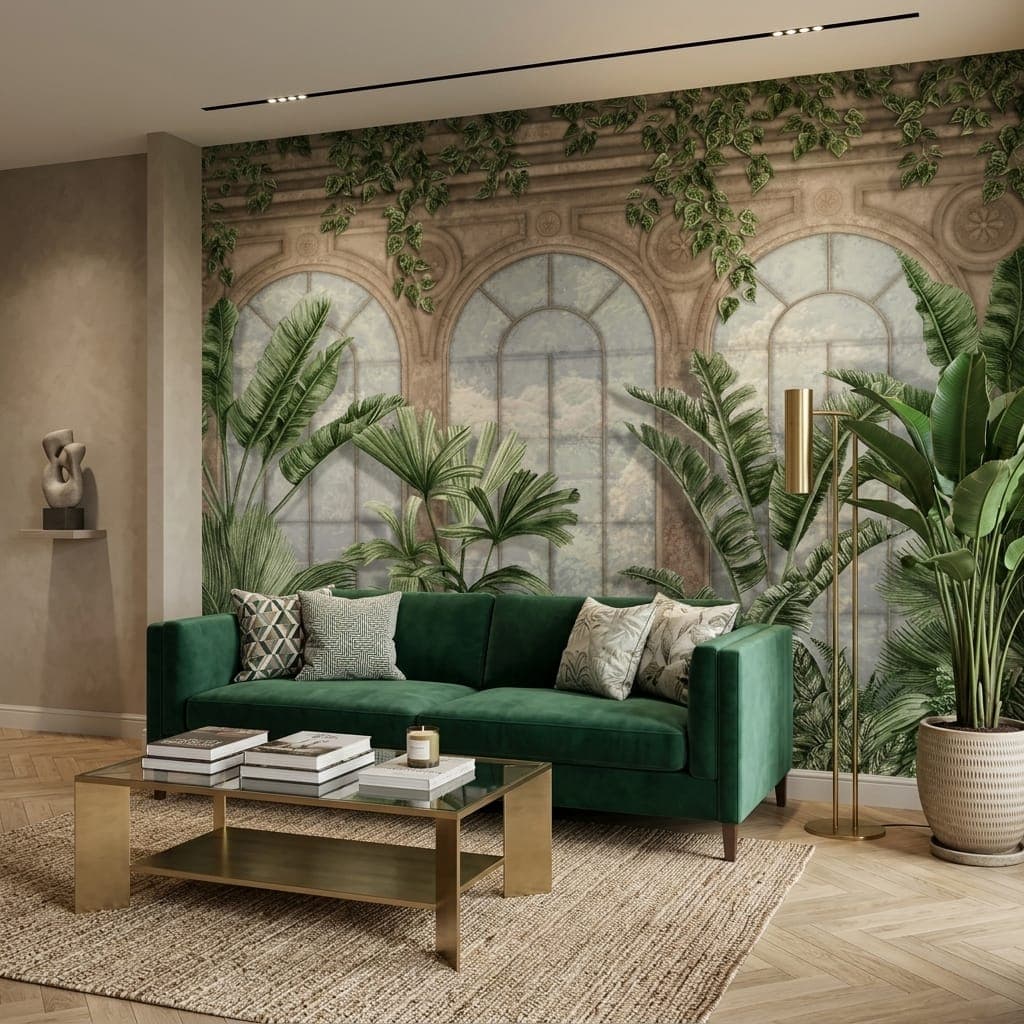
Botanical (leaf-led) compositions are gender-neutral; dark-ground tropicals are very popular in men's bedrooms.
Is the price different?
No — every design is at the same rate: 850–1,050 TL/m² (2026). Price guide.
Which curtain style goes with floral wallpaper?
If the pattern is busy, the curtain should be plain: flat linen and matte sheers are the safest pairing; take the curtain colour from the pattern's ground. With soft, sparse florals, lightly textured curtains work too. Avoid combining a patterned curtain with a floral wall — two patterns on the same window line almost always clash.
From our shop
Wallpapers You Might Like
3D White Stone Brick Textile Wallpaper
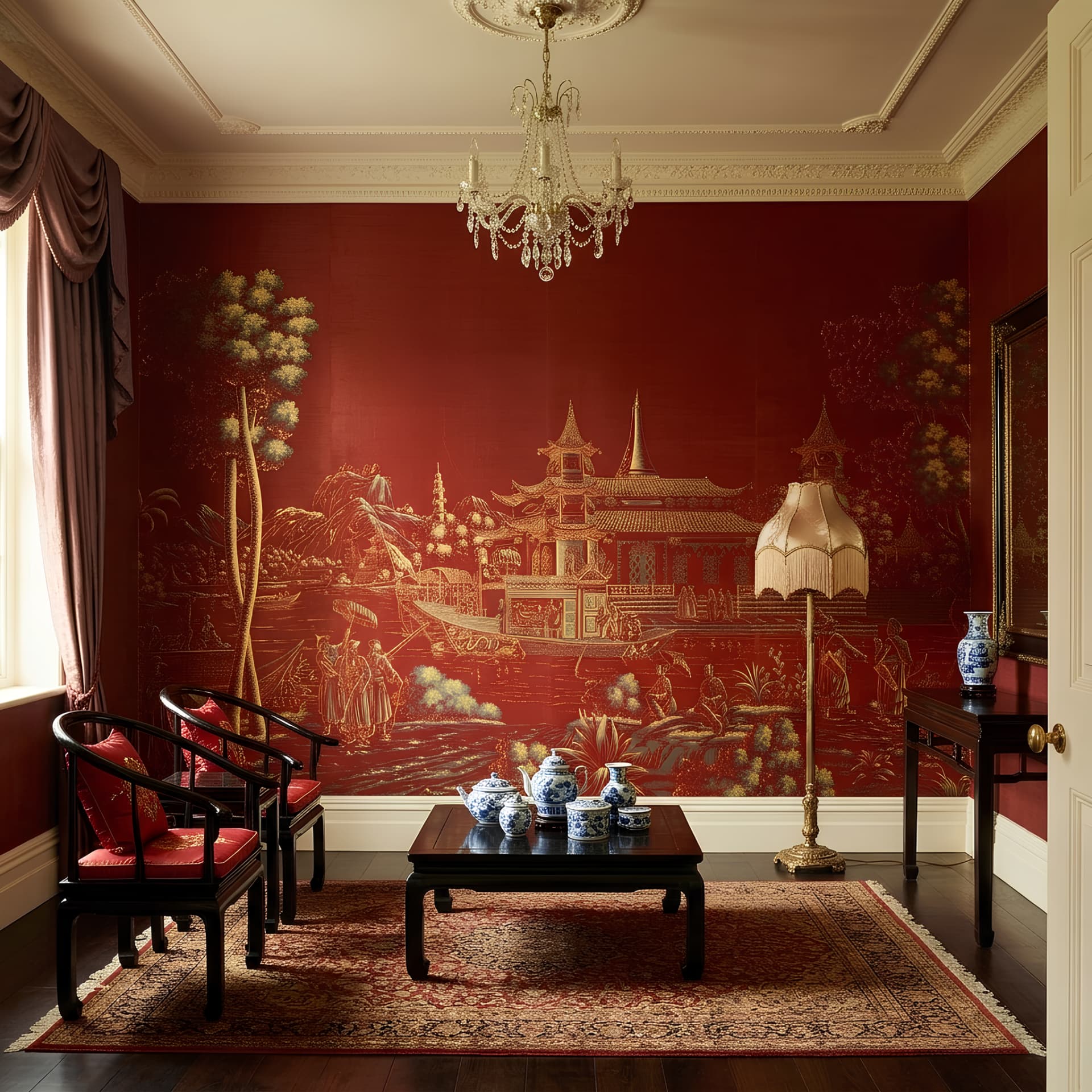
Classic Chinese Motif Burgundy Wallpaper
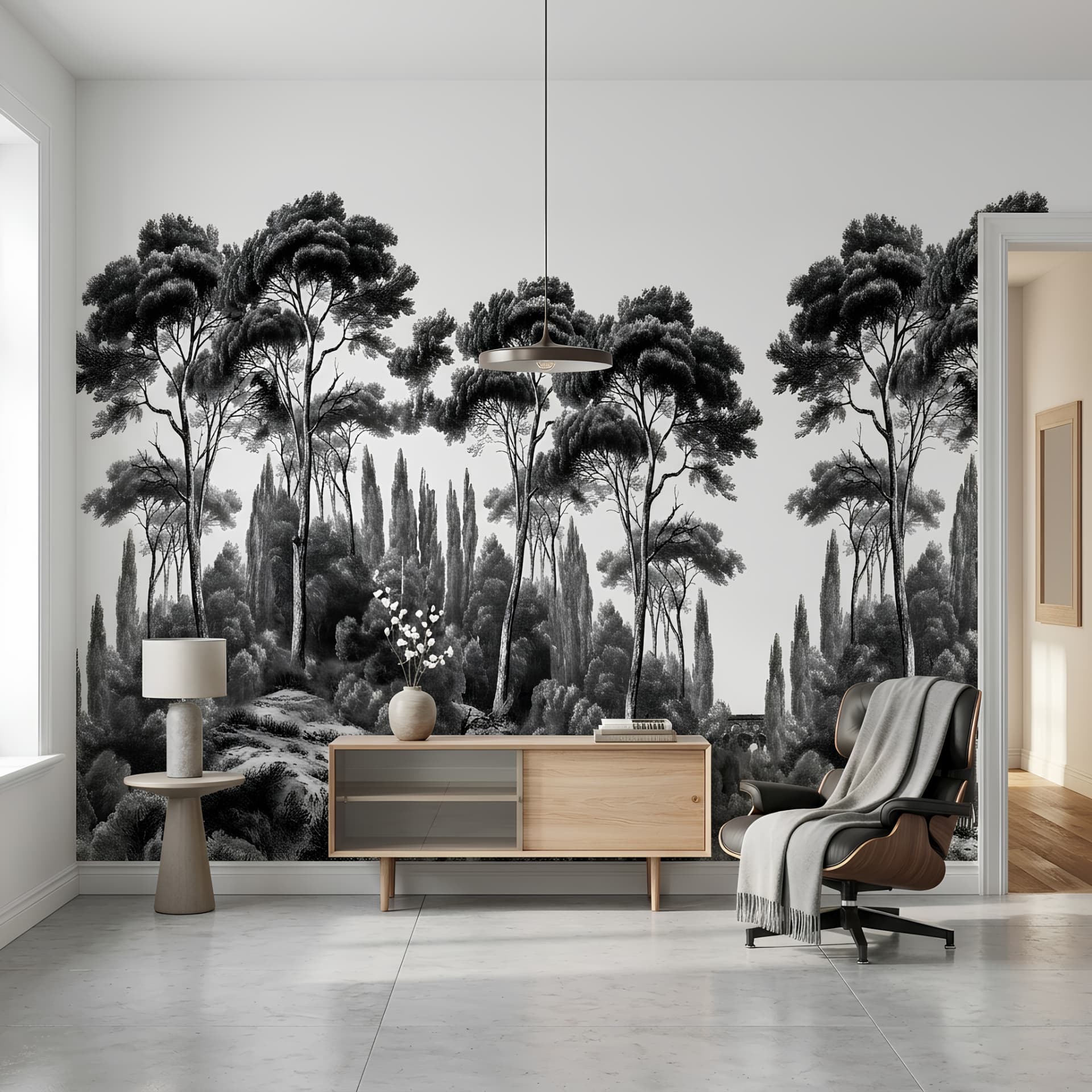
Black & White Vintage Forest Wipeable Wallpaper
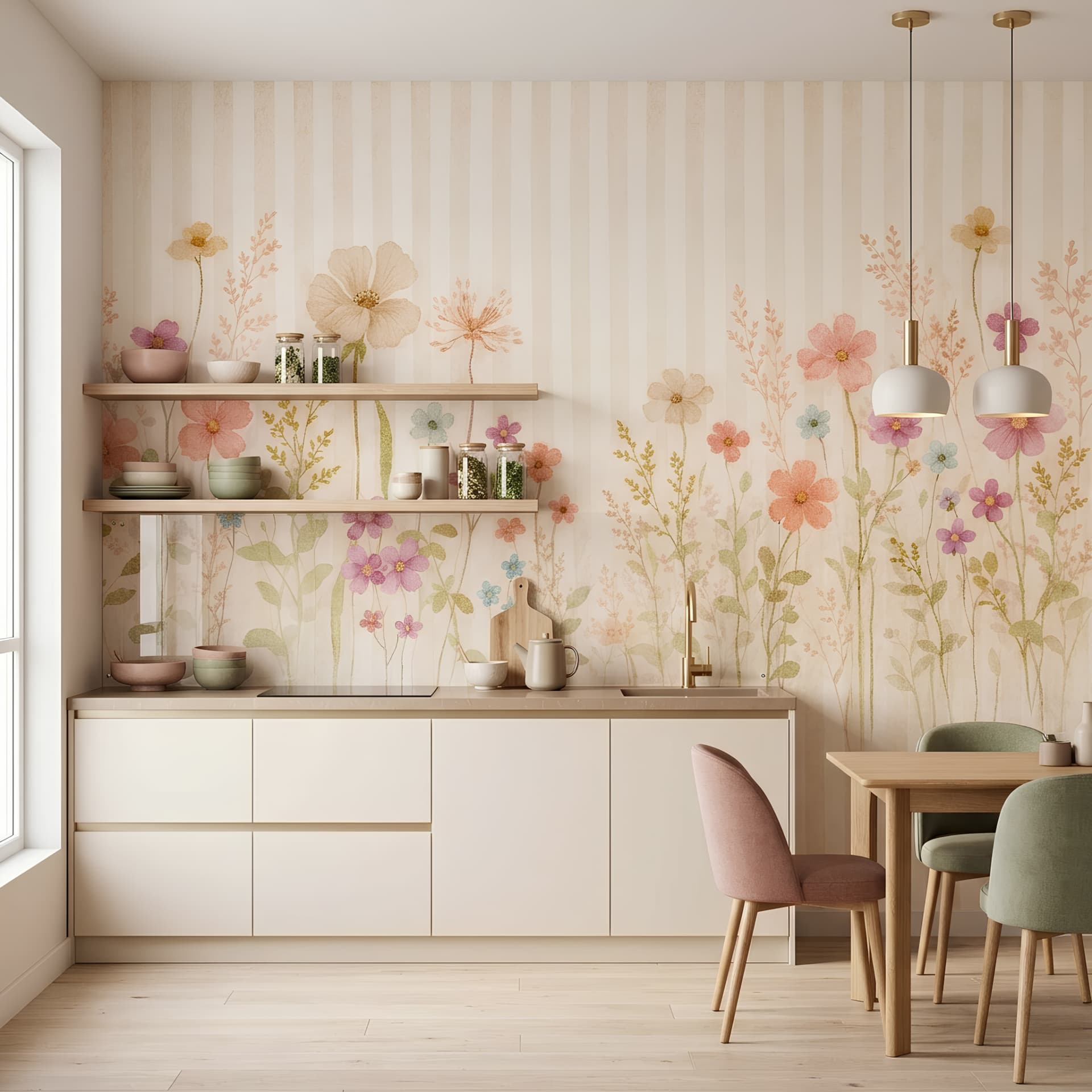
Pastel Spring Garden Striped Wallpaper
DA
Dekoartizan Tasarım Ekibi
Duvar kağıdı sektöründe uzmanlaşmış tasarım ve içerik ekibimiz, iç mekan dekorasyonu, malzeme bilgisi ve uygulama teknikleri konusundaki birikimlerini bu rehberlerde paylaşıyor. Tüm içerikler saha deneyimi ve güncel sektör verileriyle desteklenir.
İçeriklerimiz saha deneyimi ve sektörel uzmanlığa dayanır
floral wallpaperdark floral wallpaperbotanical wallpapervintage floraloversized flower print