Loading article…
wallpaper designsfeature wall ideasbotanical wallpaper
Wallpaper Designs 2026: A Room-by-Room and Style Guide
Wallpaper designs by style: 3D, botanical, stone-effect, vintage and kids' rooms. Which design suits which room, with our 2026 favourites.
D
By Dekoartizan Tasarım Ekibi··8 min read
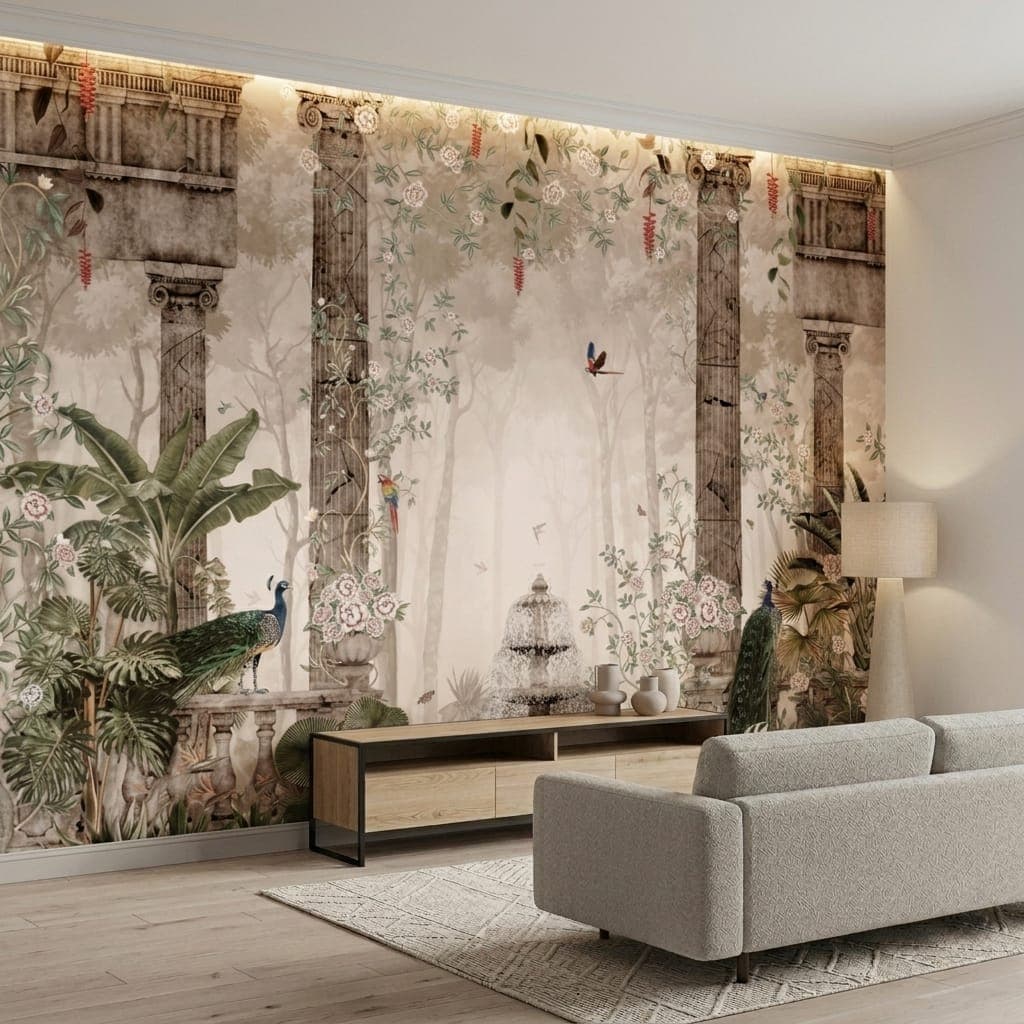
The wallpaper designs people reach for most in 2026 fall into five families: botanical and tropical patterns (the clear leader for living rooms), 3D depth effects (the classic choice behind the TV), stone-marble-wood textures, vintage and chinoiserie compositions, and themes for children's and teens' rooms.
At DEKOARTİZAN we print more than 1,000 designs as a single, made-to-measure piece for your exact wall, and the pattern you pick never changes the price (850-1,050 TL/m² depending on the material). Below you'll find the full map, room by room and style by style.
Wallpaper Designs by Style
| Design family | Best room | Character |
|---|---|---|
| Botanical & tropical | Living room, dining | Calm greens or sophisticated dark grounds |
| 3D & depth effect | Behind the TV | Arches, terraces, relief geometrics |
| Stone, marble & wood | Feature and TV walls | Texture without the cost of cladding |
| Vintage & chinoiserie | Classic living rooms | Birds, damask, Ottoman tile motifs |
| Minimal & modern | Scandinavian interiors | Single-tone textures, fine lines |
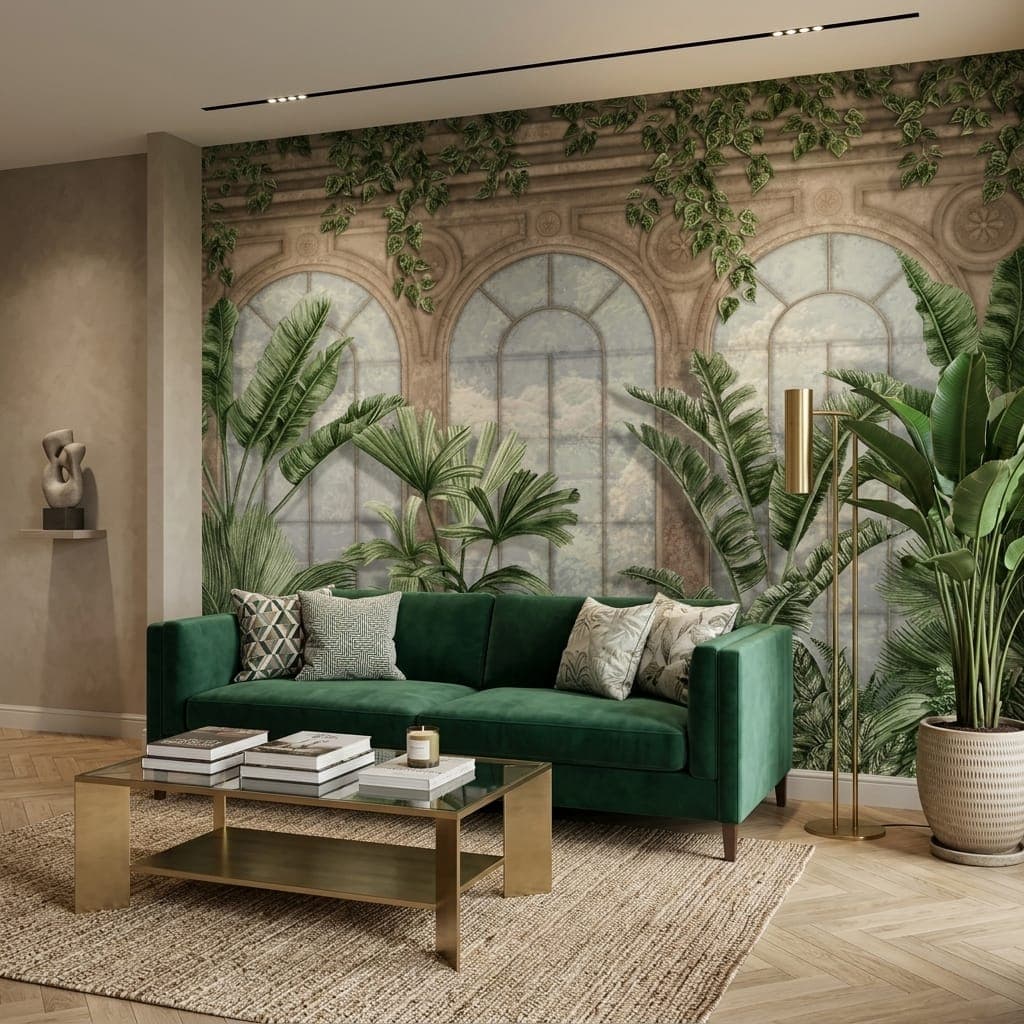
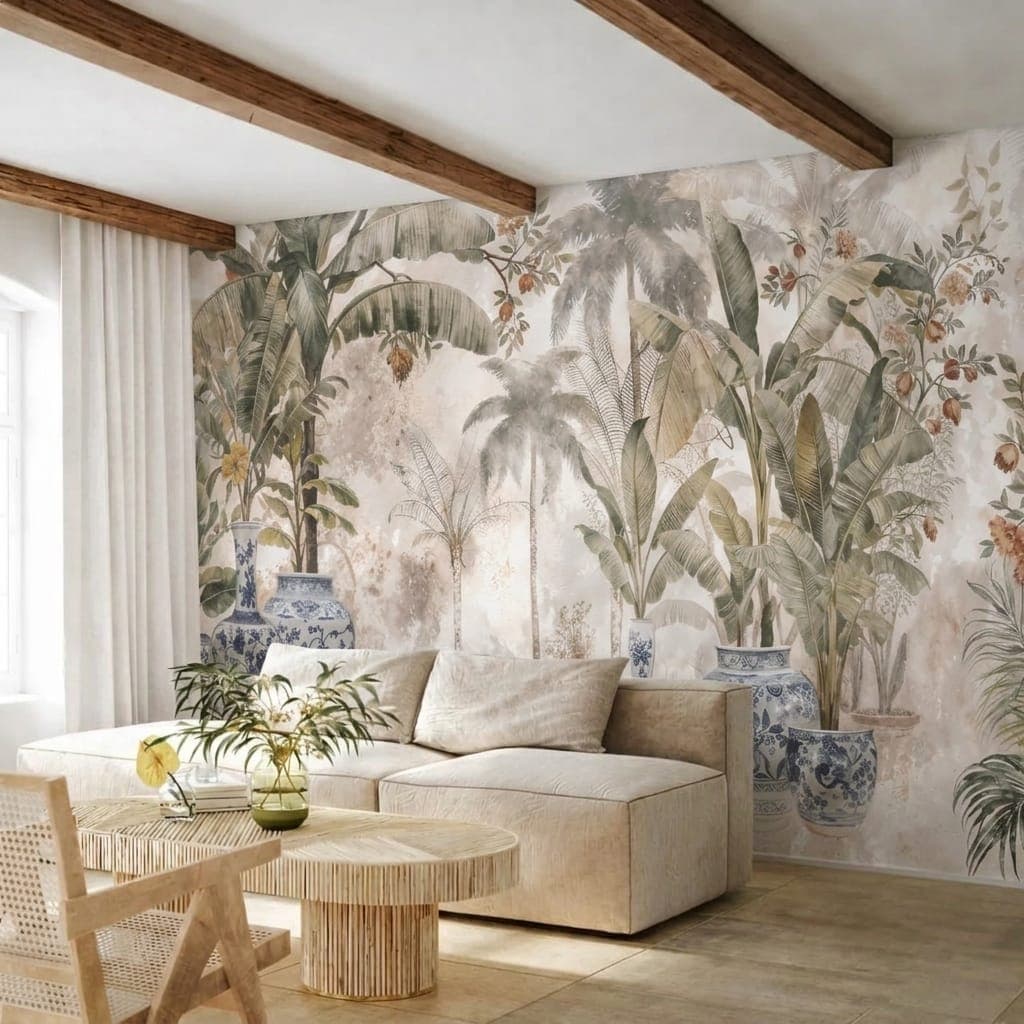
Botanical and Tropical Designs
Leaves, exotic blooms and rainforest scenes have led the way for three years running, and 2026 shows no sign of that slipping. Soft greens bring calm to a living room, while dark-ground tropicals add a sophisticated edge to a dining area. Our best-sellers are in this list; the trend breakdown lives in our 2026 trend report.
3D and Depth-Effect Designs
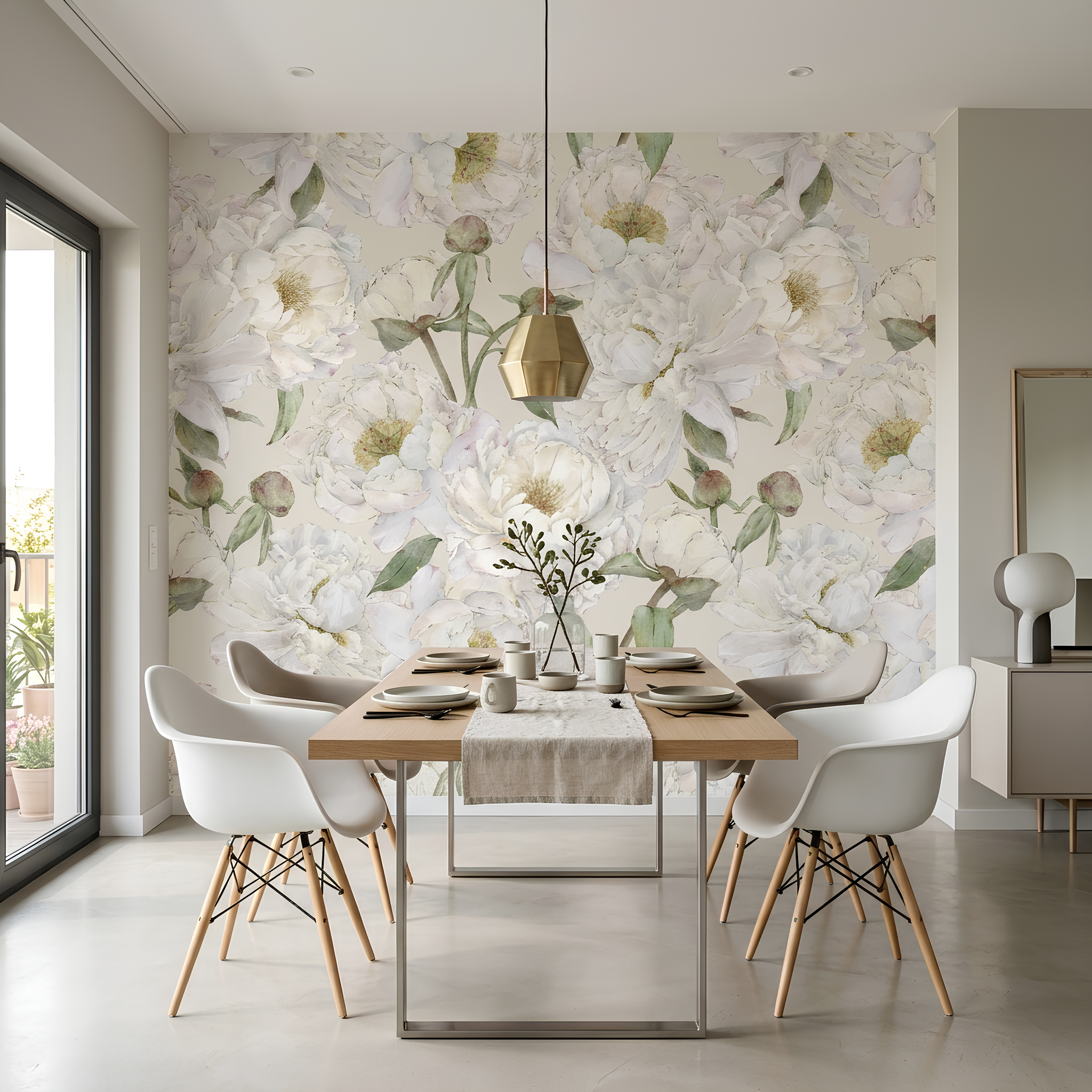
Arched windows, terrace views and relief-look geometrics give a wall a genuine "third dimension". This family is the number-one choice for the wall behind the TV — take a look at our behind-the-TV guide and our 3D guide. Every design sits in the 3D collection.
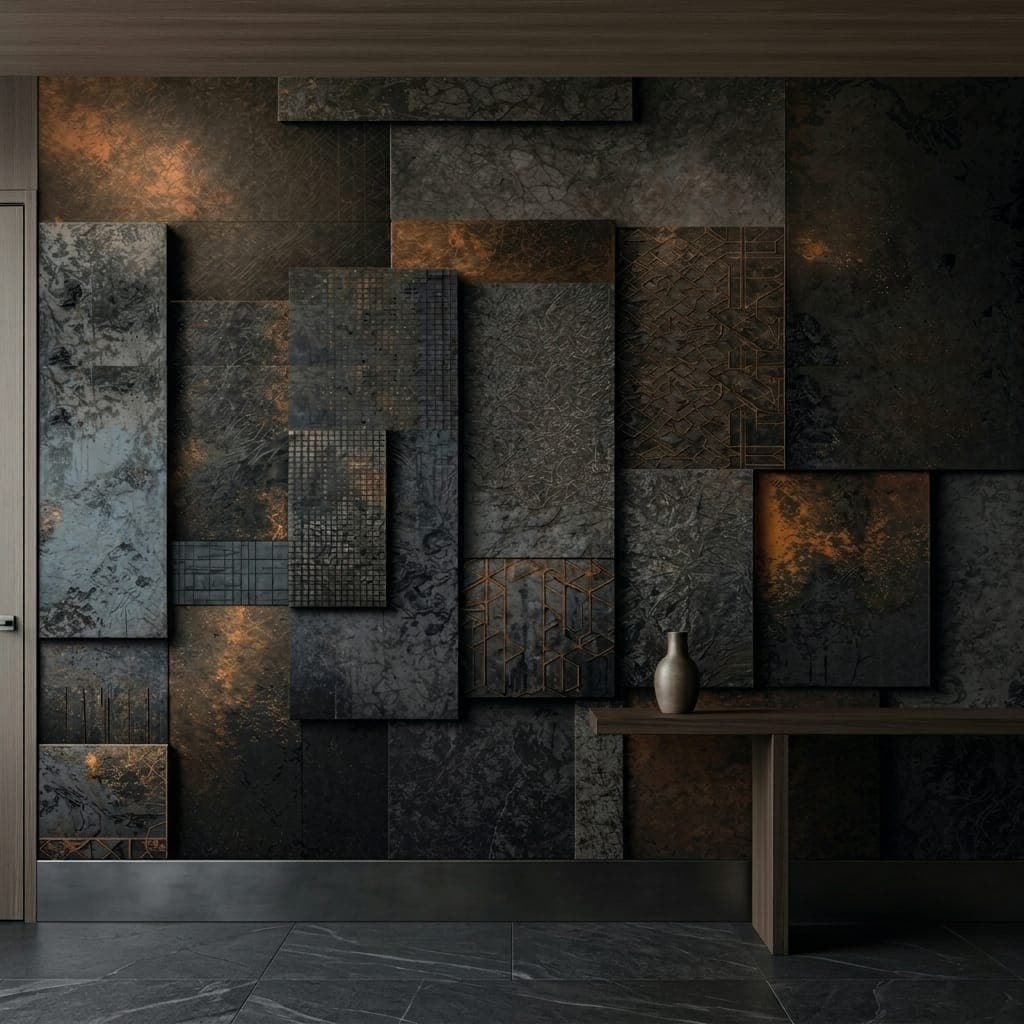
Stone, Marble and Wood-Effect Designs
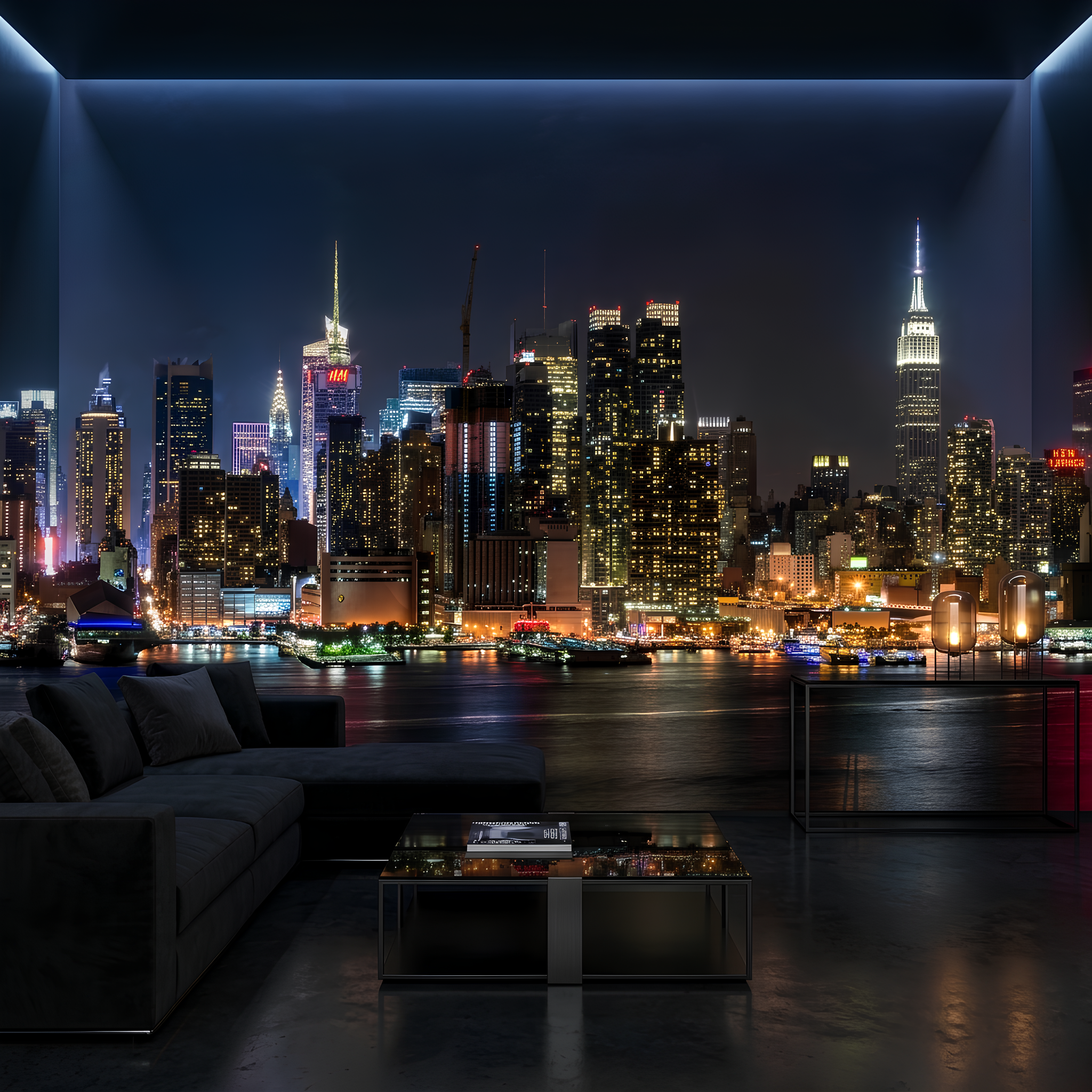
You get the texture without the cost or weight of real cladding: stone walls with a raised, tactile feel, Calacatta marble and distressed timber patterns. The detailed comparison is in our stone-effect guide.
Vintage and Classic Designs
Chinoiserie branches with birds, engraved landscapes, Ottoman tile motifs and damask patterns are the safest match for classic furniture. For floral-led designs the whole family will love, see our floral wallpaper guide. The vintage collection covers this entire family.
Minimal and Modern Designs
Single-tone textures, fine geometric lines and abstract brushstrokes are the pick for anyone who lives by "less, but better". White and beige textured designs are a standard in Scandinavian interiors.
Choosing a Design by Room
Living Room
Large compositions (botanical, landscape, 3D) work beautifully on a feature wall; if you're covering all four walls, choose calmer textures instead. For twelve ideas, see our living room guide.
Bedroom
Behind the headboard, large florals on a dark ground and soft botanicals are the 2026 favourites. We've covered them alongside colour psychology in our bedroom guide.
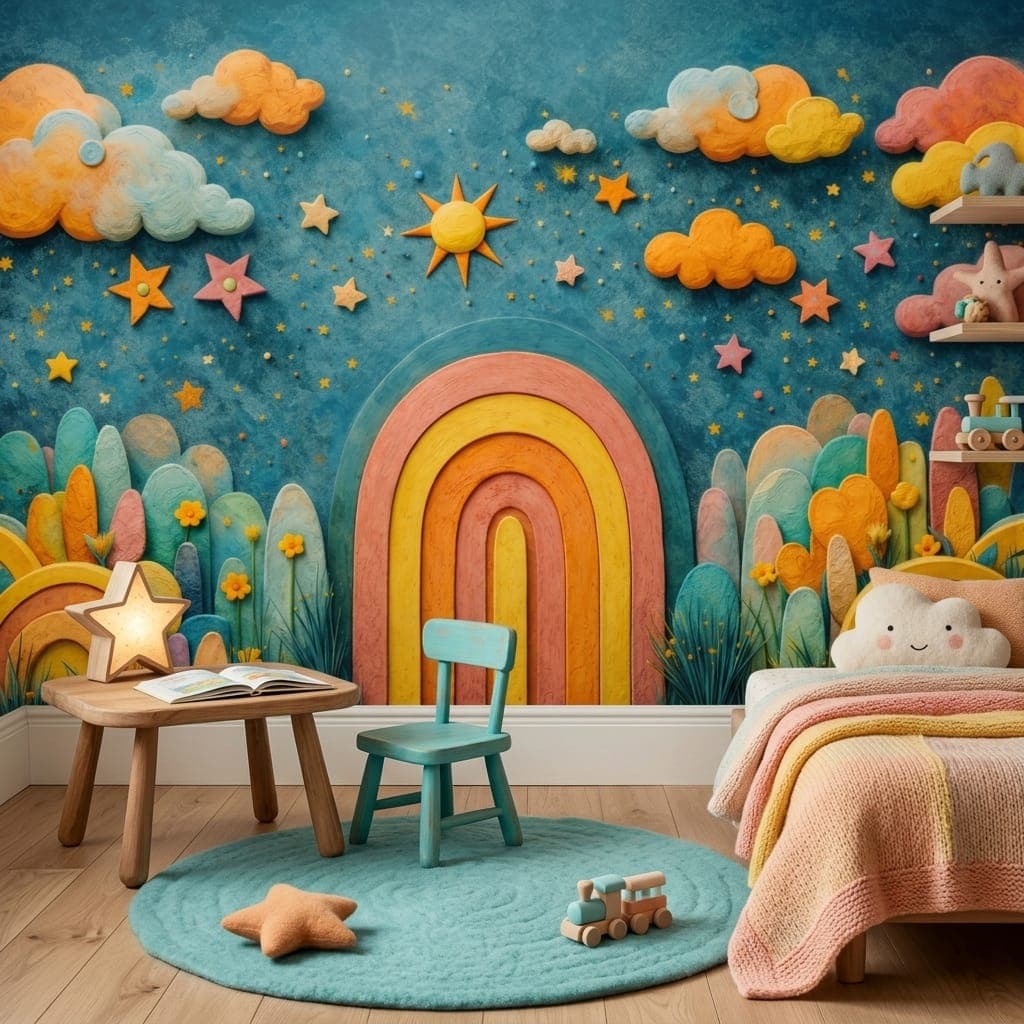
Children's and Teens' Rooms
Pastel cloud-and-balloon themes suit a nursery, woodland friends work for primary-school age, and city-space-sport themes come into their own for teenagers. Two separate guides: children's rooms and teens' rooms.
Kitchen and Bathroom
In wet areas the material matters as much as the design: a wipeable surface is essential. Our kitchen guide and bathroom guide are ready separately.
Office and Workplace
Corporate-identity prints, motivational typography and calm textures — our office guide sets out recipes sector by sector.
Four Practical Rules for Choosing a Design
- Small room, light ground: A dark, busy pattern closes a small room in; our space-expanding tricks guide gives you the formulas.
- Patterned furniture means a plain wall (and vice versa): Two patterned surfaces don't compete — they clash.
- Confirm with a sample: A sample closes the gap between screen colour and printed texture; it's essential with dark designs in particular.
- Have the design fitted to your measurements: With made-to-measure production the composition is shifted to suit your wall — the focal point of the pattern won't disappear behind the sofa.
Design Pricing: Does the Pattern Change the Cost?
No — in digital printing the plainest texture and the most intricate composition come off the same tariff: 850-1,050 TL/m² (by material type). In other words, your taste decides the design, not your budget. The table and room-by-room costs are in our pricing guide; for surface area, see m² calculation.
A Mini Pattern Glossary: Repeat, Motif, Composition
Let's clear up the three terms you'll run into while searching. A motif is the smallest repeating unit of a pattern (a single flower, a single geometric form). The repeat is the vertical distance over which the motif reappears — on ready-made rolls this is the figure that determines your wastage. A composition, by contrast, is a non-repeating, wall-length single-scene design; this is where digital printing really comes into its own. The world of ready-made rolls works on motif-and-repeat logic, while made-to-measure works on composition logic; the difference set out in our calculation guide stems from exactly this.
What's Rising and What's Fading in 2026
An honest balance sheet for those who follow the trends: on the rise are dark florals, micro-cement textures, misty Scandinavian forests and Japandi linearity. Plateauing are tropical leaves (still strong, but past their peak) and world maps. On the way down are glossy repeating damasks, slogan/text walls and over-saturated 3D city collages. Investing in a fading trend isn't wrong — a design you love outlives any trend — but with anything in the plateau or decline group, ask the "will I be tired of it in three years" question twice.
How Does the Sampling Process Work?
A sample is the insurance on your design decision, and the process is simple: you request a sample from the product page, and a real print of your chosen design in A4-A3 size (on the same base material) is sent to your address. Tape the sample to the wall and look at it in both morning and evening light, next to your furniture; the screen-versus-real difference shows up especially on dark grounds and textured surfaces. Don't hesitate to request several samples if you have more than one finalist — set against the cost of getting 10 m² wrong, the price of a sample is a rounding error.
Can Two Patterns Share One Room?
They can, but only with a hierarchy. The rule is this: one pattern plays the "lead" (the feature wall) and the second plays the "extra" (very faint, almost at texture level), and both should draw on the same colour family. Two patterns of equal strength always clash in the same room. Safe pairings: a large floral with a fine striped texture, a stone look with a plain linen texture, a landscape composition with a micro-pattern in the ground colour. If in doubt, leaving the second wall painted is never a mistake.
Best-Sellers by Category
A quick snapshot from our sales data for the undecided: in living rooms, tropical botanicals and misty forest scenes lead; in bedrooms, large florals on a dark ground are the clear winners; in children's rooms, balloon-and-cloud pastel themes; in offices, world maps and concrete textures; behind the TV, a grey stone look. Don't let "what everyone's buying" dictate your taste, but for anyone after a safe harbour it's a good starting point — our best-sellers page shows this list live. From there, requesting a sample of a design you like and testing it in your own light is the shortest route to a decision.
A Final Word on Choosing a Design
The antidote to getting lost among a thousand designs is the order in which you narrow down: room first, then material, then colour family, and the pattern last. A customer who enters the catalogue in that order is down to three finalists in a few minutes; one who starts from the other end (the pattern) wanders for hours. Request samples of your finalists, look at them in your own light, and choose the one your gut says "yes" to — data, rules and trends are a guide, but you're the one who'll live with the wall every day. Wherever you get stuck along the way, our WhatsApp line is open for design suggestions.
Classic and Special Concepts
For classic families like damask, toile and Damascus work, our traditional wallpaper guide; for offices and teens' rooms, our world map guide; and for the surface most homes overlook, our ceiling wallpaper guide shows the way.
Frequently Asked Questions
Which wallpaper designs are most on-trend in 2026?
Botanical/tropical compositions, large florals on a dark ground, stone-and-marble textures and 3D depth effects. The full analysis is in our trend report.
How many designs can I choose from?
There are 1,000+ designs in the catalogue; we also produce custom designs from your own image — both at the same per-m² rate.
Where can I browse the design catalogue?
From the categories page you can browse every design, filtering by room and style.
Which design makes a small room look larger?
Light-ground designs, perspective landscape scenes and vertically rhythmic patterns. Detailed tactics are in this guide.
If I want to change the design, will the old paper be a problem?
No — because non-woven backings come off dry and in one piece, refreshing the design is a half-day job. Stripping the old paper and applying the new design to the same wall is easier than the first install, because the wall prep is already done. Refreshing the design every three to five years is, for that reason, far less of a chore than people assume.
From our shop
Wallpapers You Might Like
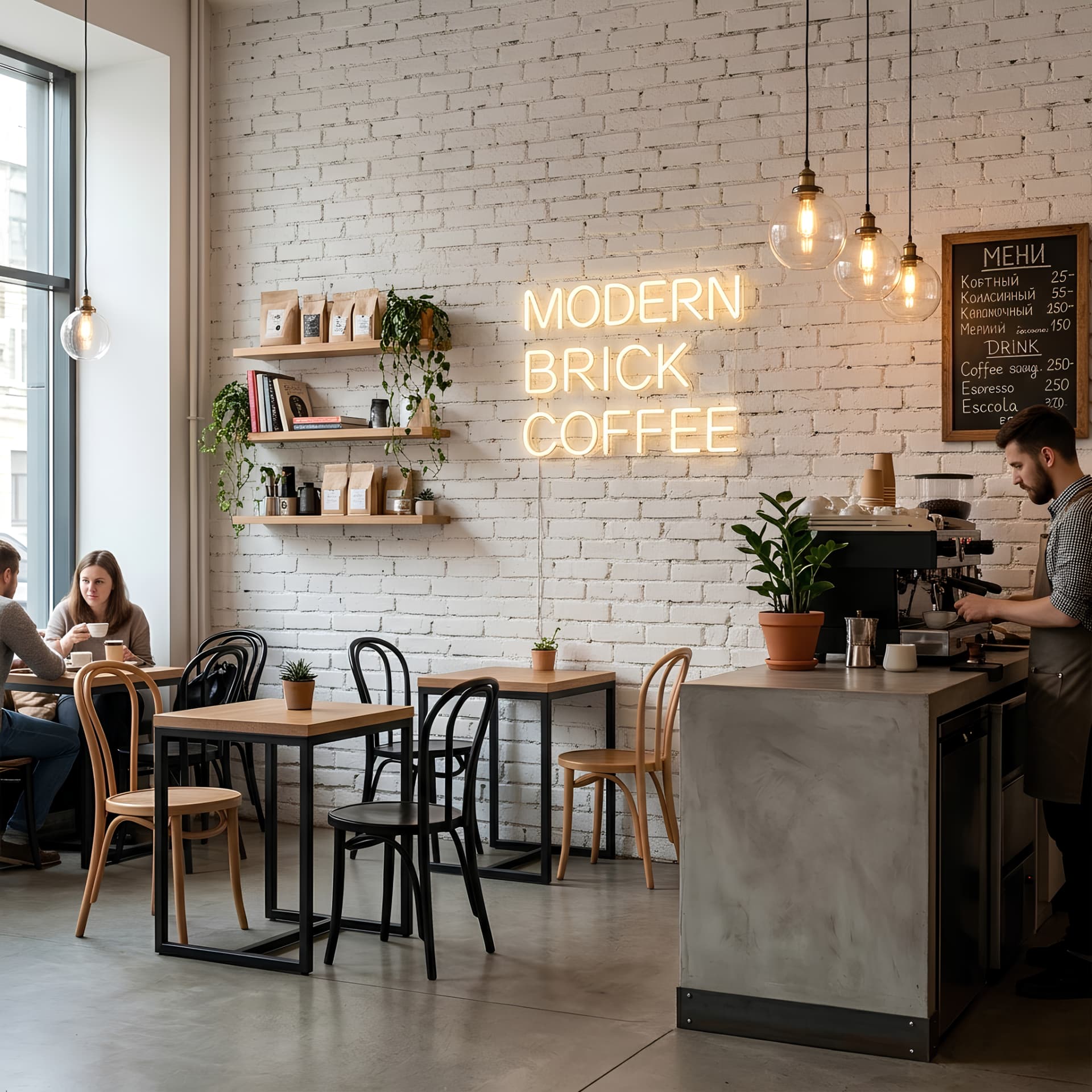
3D White Stone Brick Textile Wallpaper
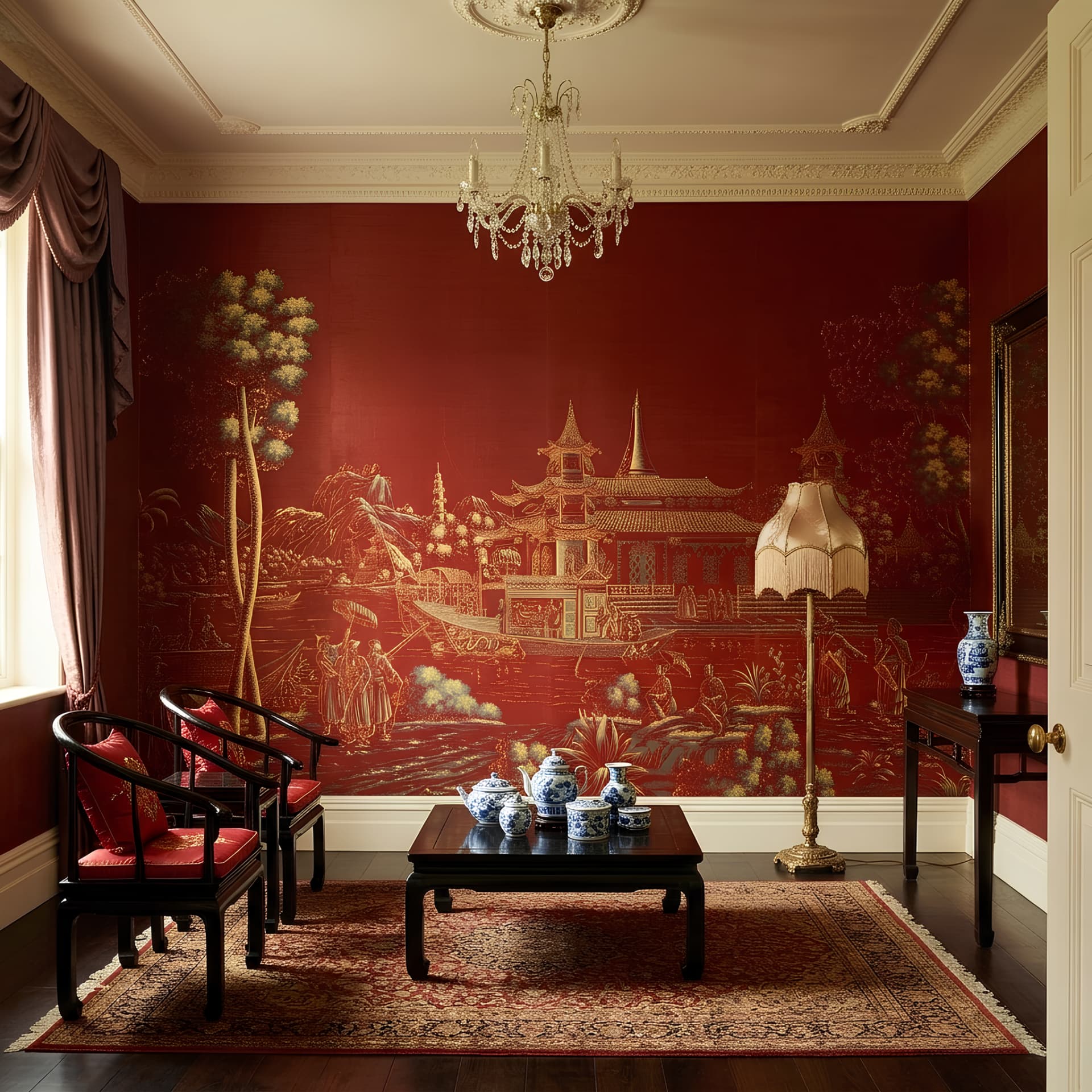
Classic Chinese Motif Burgundy Wallpaper
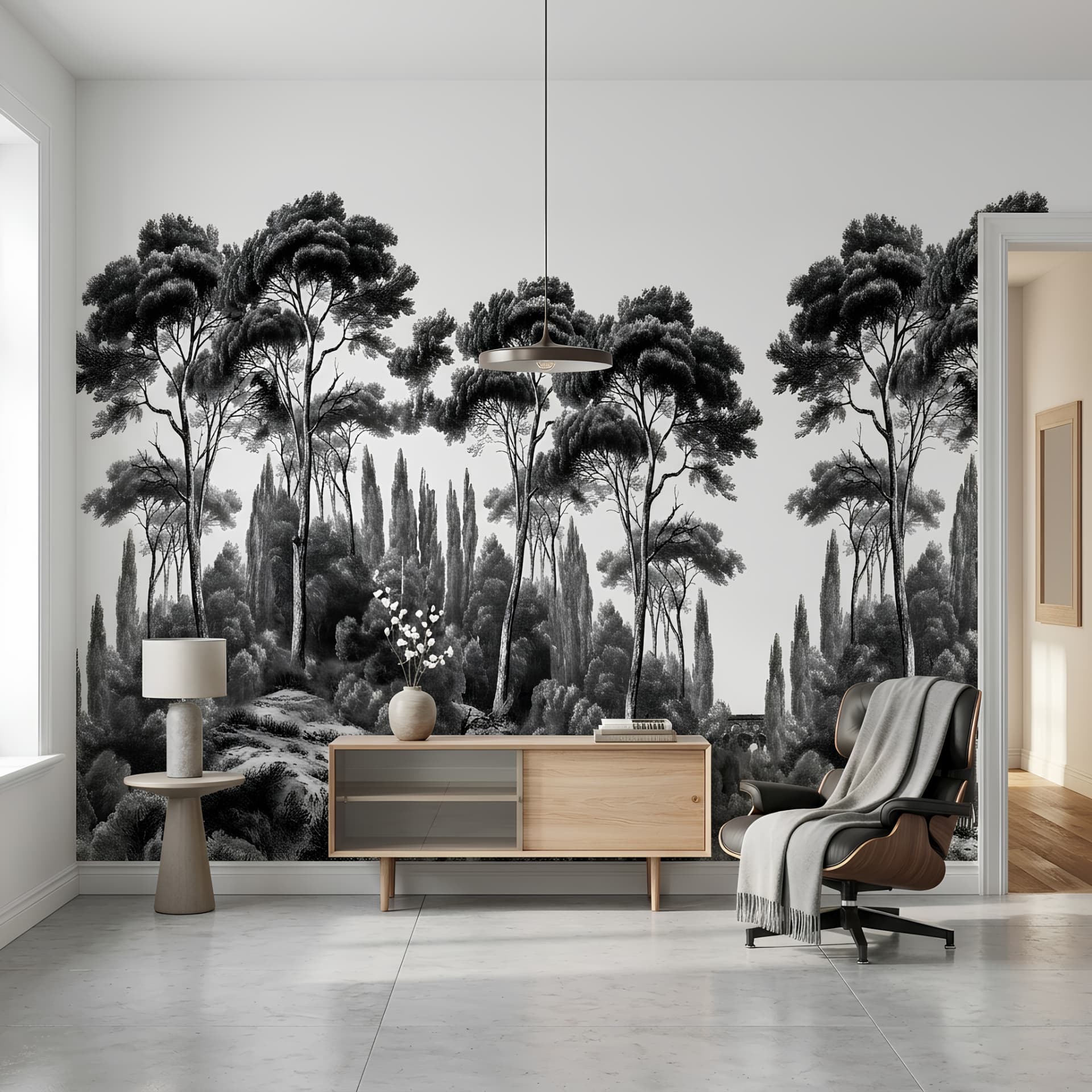
Black & White Vintage Forest Wipeable Wallpaper
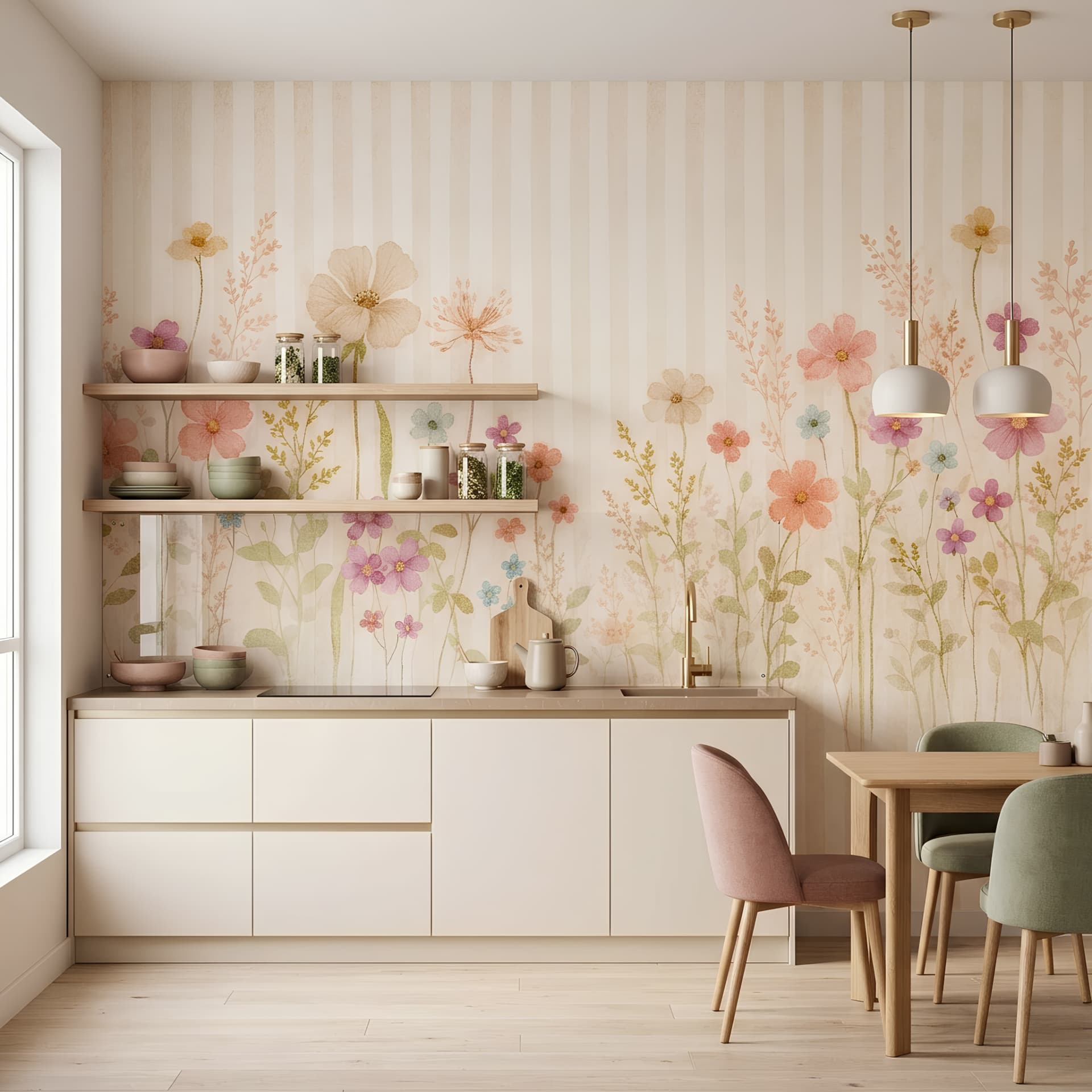
Pastel Spring Garden Striped Wallpaper
DA
Dekoartizan Tasarım Ekibi
Duvar kağıdı sektöründe uzmanlaşmış tasarım ve içerik ekibimiz, iç mekan dekorasyonu, malzeme bilgisi ve uygulama teknikleri konusundaki birikimlerini bu rehberlerde paylaşıyor. Tüm içerikler saha deneyimi ve güncel sektör verileriyle desteklenir.
İçeriklerimiz saha deneyimi ve sektörel uzmanlığa dayanır
wallpaper designsfeature wall ideasbotanical wallpaper3d wallpaper2026 interior trendsmade to measure wallpaper