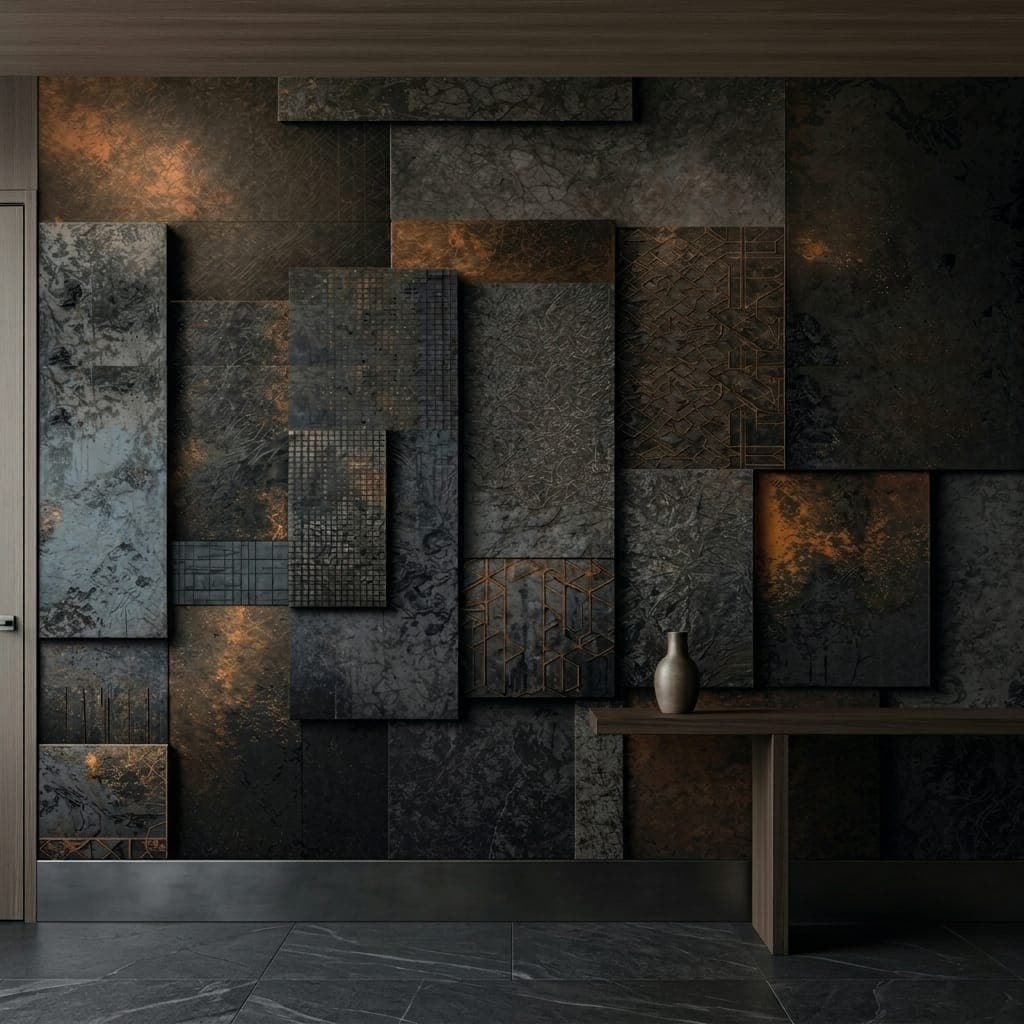
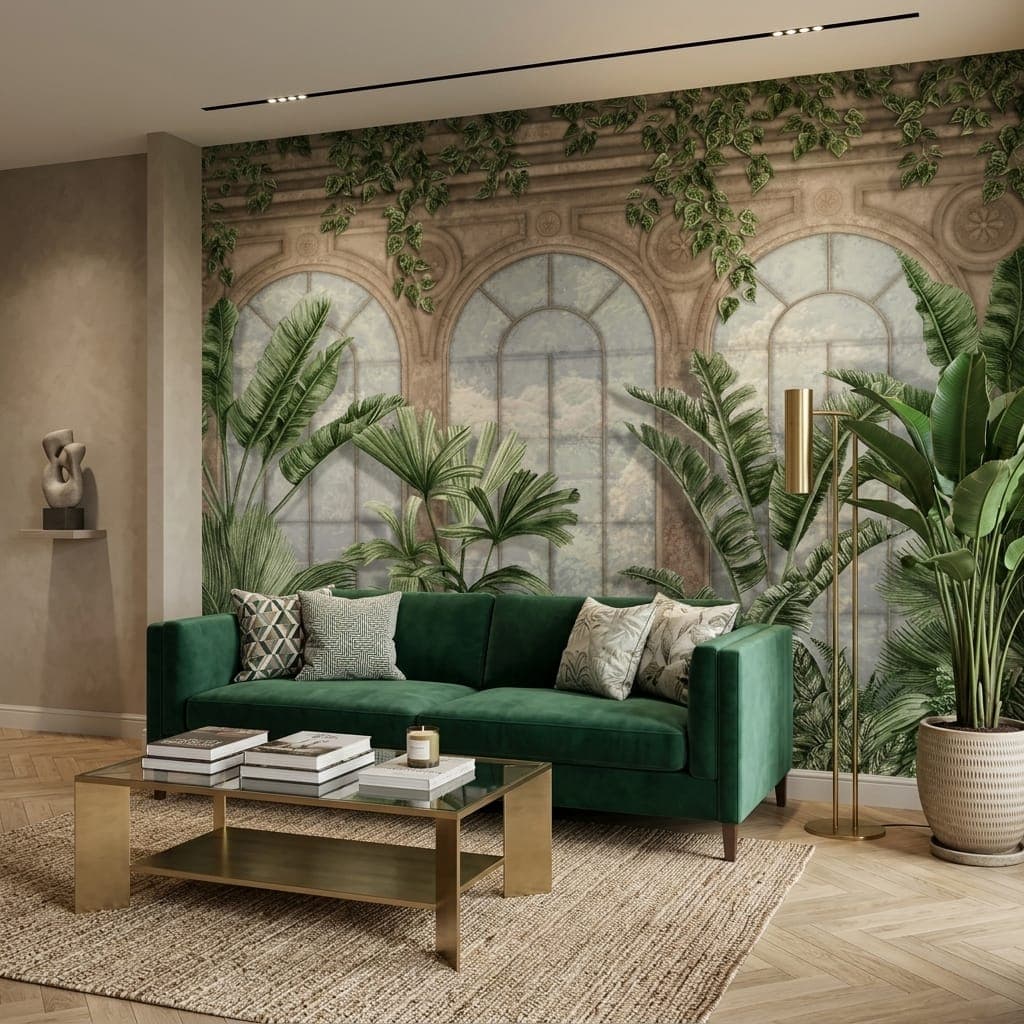
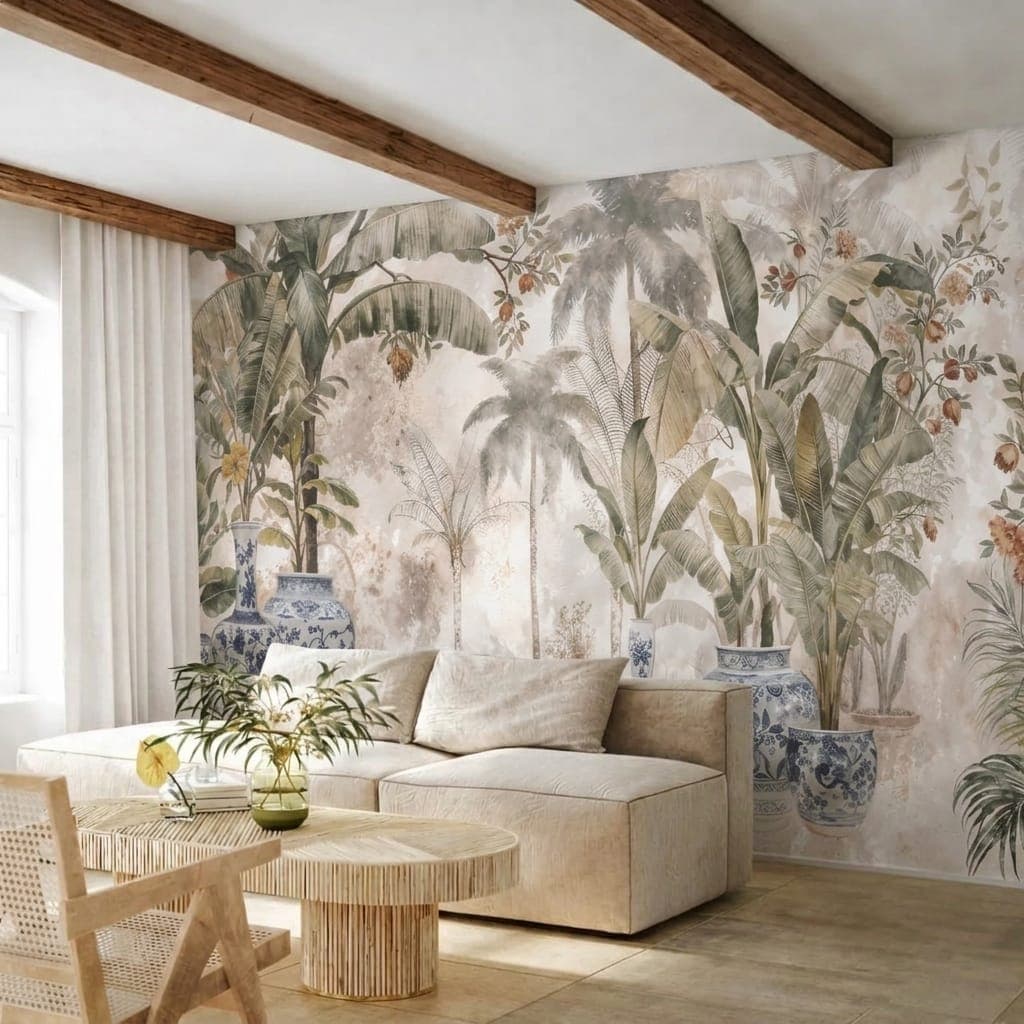
Loading article…
traditional wallpaperdamask wallpapertoile de jouy
Traditional Wallpaper: A Guide to Damask, Toile & Pattern Discipline
Traditional wallpaper isn't dated — it only looks dated when it's used badly. The rules for balancing damask, toile and Damascene patterns in a modern home.
D
By Dekoartizan Tasarım Ekibi··6 min read
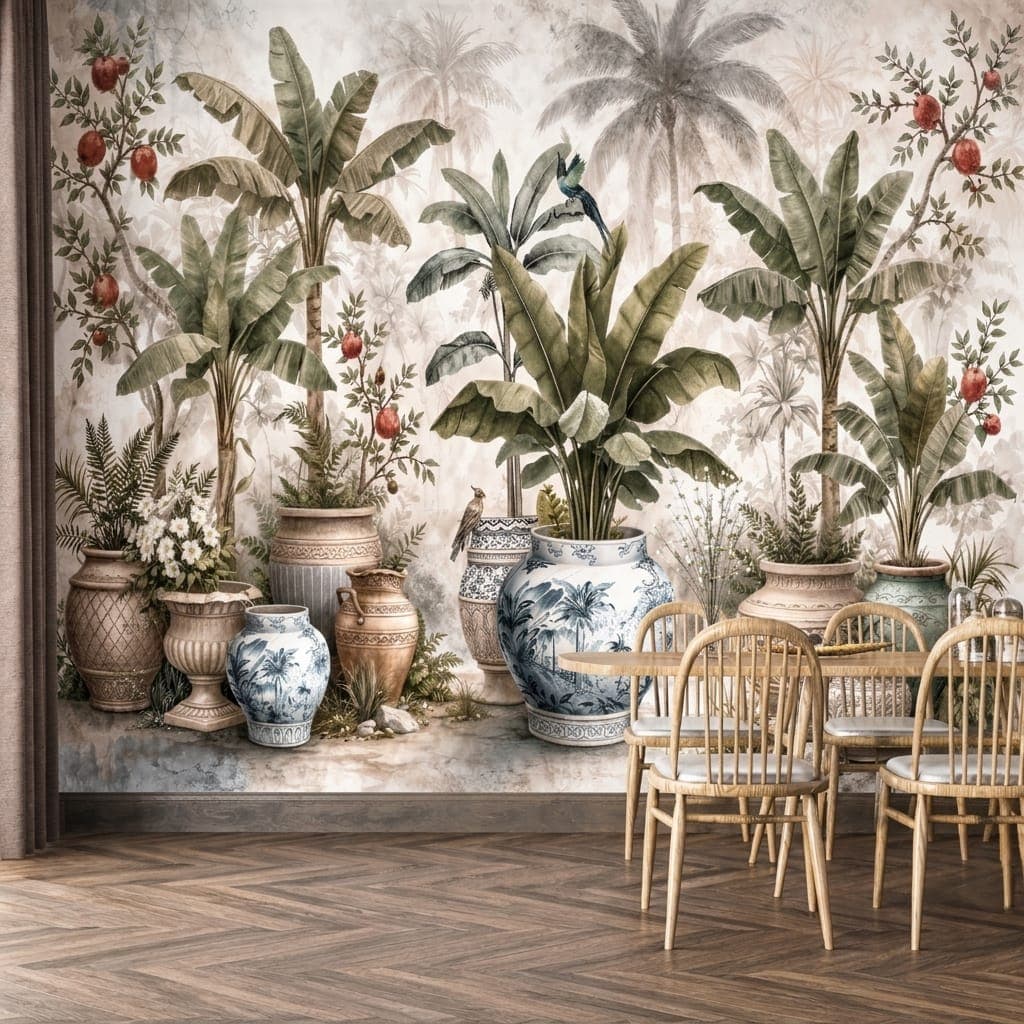
Traditional wallpaper isn't a single pattern — it's a pattern discipline: the shared name for symmetry-led, repeat-heavy classic families such as damask, toile de Jouy, Damascene, engraved landscapes and chinoiserie.
When it looks dated, the fault lies with the scale and the colour, not the pattern itself — a small, busy dark repeat ages a room, while a correctly scaled single feature wall ennobles it. In a modern home the rule is simple: balance a traditional pattern with plain furniture and keep it to one wall.
The Families of Traditional Wallpaper
When the trade says "classic", five main pattern families come to mind; knowing which one suits you shortens the whole selection process:
| Pattern family | Character | Where it works best |
|---|---|---|
| Damask | Symmetrical, medallion-like botanical motif; the most recognisable classic | Living-room feature wall, dining room |
| Toile de Jouy | Single-colour pastoral scenes (countryside, figures, landscapes) | Bedroom, hallway, bathroom |
| Damascene / damask weave | Matt-and-sheen play in the same tone, textured elegance | Classic living room, headboard wall |
| Engraving / antique landscape | Sketch-like sepia landscapes, architecture | Study, corridor |
| Chinoiserie | Hand-painted look with flowering branch-and-bird compositions | Dining room, elegant entrances |
Most of these families appear in our vintage collection, and the engraved landscapes sit within the stone and antique-textured ranges.
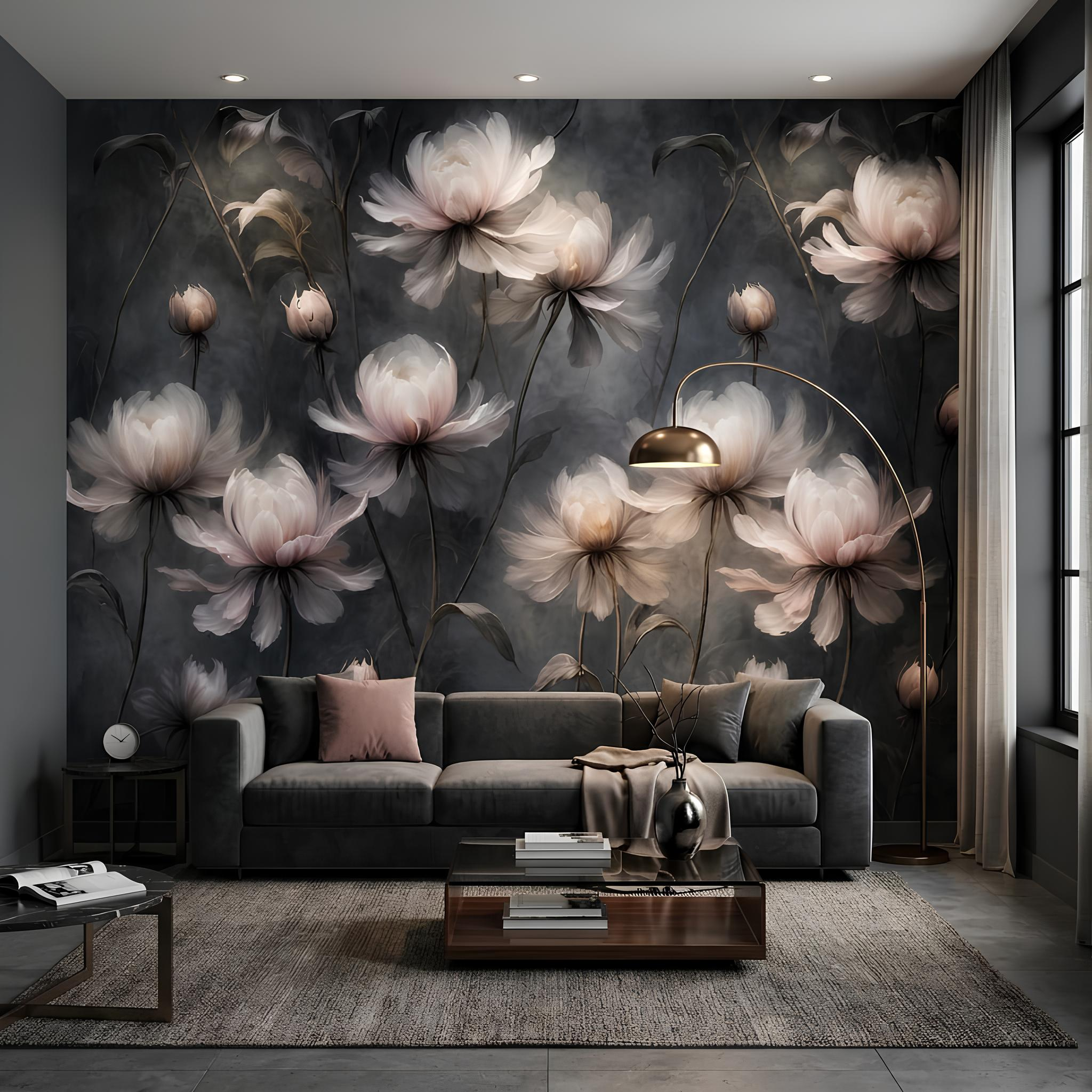
Pattern Discipline: Why Is Traditional a "Rule-Bound" Style?
Traditional patterns rely on mathematical repetition; that's where both their strength and their risk lie. Three discipline rules:
- Treat the repeat like a backdrop, not the hero. Damask is a "texture"; pile heavy furniture and a crowded picture wall on top of it and the room feels oppressive. If the pattern is strong, keep the furniture calm.
- Scale defines the room. A large medallion is magnificent in a high-ceilinged, spacious living room; in a room under 12 m² the same pattern should be scaled down — with bespoke digital printing we adjust the motif diameter to the space, an advantage no off-the-shelf roll offers.
- The single-wall rule. Wrapping a traditional pattern across all four walls is too much for most homes; one feature wall (a headboard, behind a fireplace, a dining nook) is both more effective and more economical. The feature-wall logic is shown with examples in our living-room guide.
Traditional Wallpaper in a Modern Home: Without Looking Dated
The antidote to the "granny pattern" fear is contrast. Three moves that make a classic pattern feel contemporary:
- Update the colour: instead of burgundy-and-gold, a grey damask on an anthracite ground, or a sage-green toile — same pattern, contemporary palette. Current colour directions are in our trend report.
- Balance it with a plain frame: flat-painted surrounding walls, minimal furniture and modern lighting elevate a classic pattern to "artwork" status.
- Add texture: matt-and-sheen tonal play like Damascene reads as material rather than print, so it looks luxurious in a modern space — a textile base strengthens this effect.
Which Traditional Pattern for Which Room?
- Living room: large-scale damask or Damascene on a single feature wall. The safest pairing with classic furniture.
- Bedroom: toile de Jouy or a soft damask behind the bed; single-colour pastoral scenes are restful. Bedroom guide.
- Dining room / hallway: chinoiserie flowering branches are the most refined way to say "a home with care".
- Study / corridor: engraved landscapes and antique architecture set an intellectual tone.
Price and Production
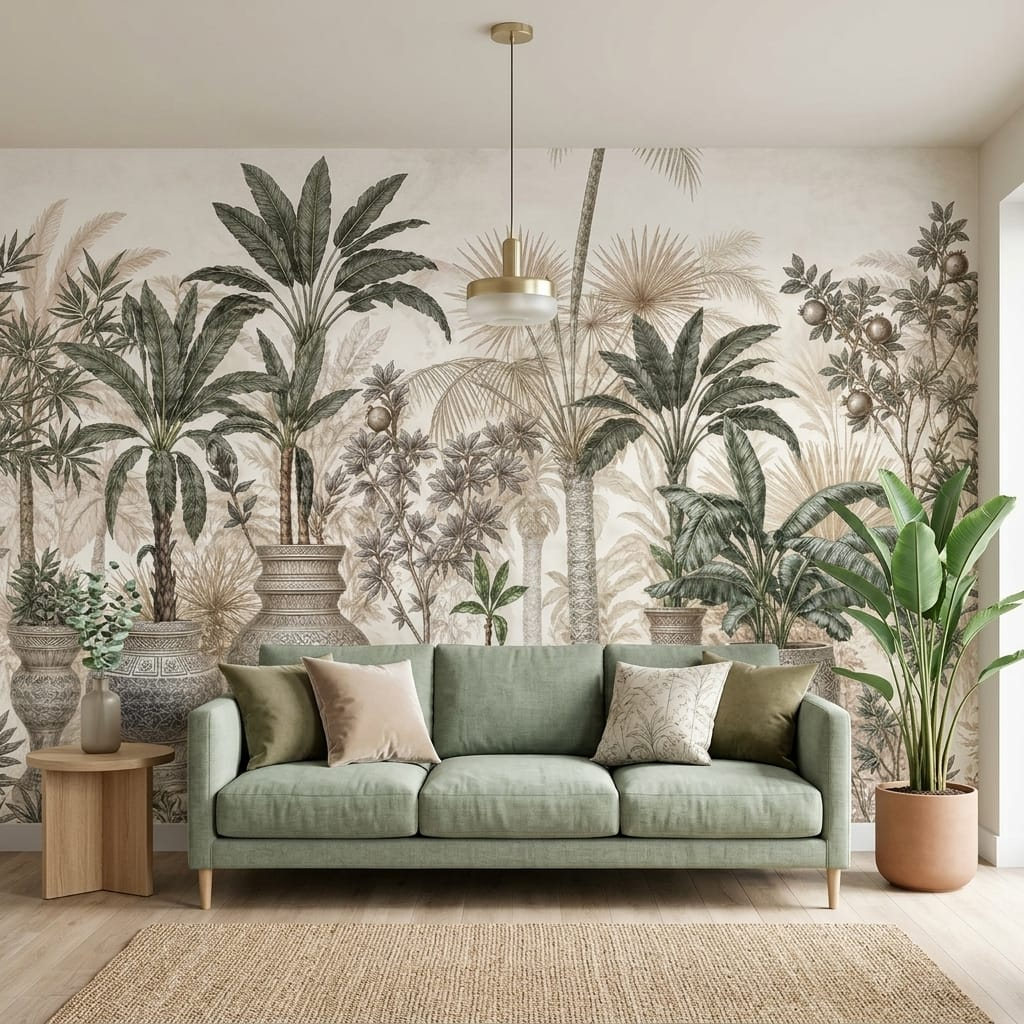
We produce traditional patterns at our standard rate: 850 TL/m² (premium textile), 1,050 TL/m² (canvas texture) — 2026. Because ready-made imported classic rolls often come to 1,100-2,000 TL per m², bespoke printing onto an imported base paper balances both quality and price; details in our import guide. Work out your room dimensions with our m² calculator; the full rate sheet is in the pricing guide.
Traditional, Vintage, Classic: Clearing Up the Terms
These three terms are often confused, but they describe different things — and searching with the right word is half of finding the right product:
- Traditional: describes a pattern discipline — symmetrical, repeat-structured classic families such as damask, toile and Damascene.
- Vintage: a mood; ageing, nostalgia, faded colour and an engraved effect. A traditional pattern can be given a vintage treatment, but not every vintage pattern is traditional. More in the vintage collection.
- Classic: the umbrella term that covers both; another way of saying "timeless".
The practical upshot: if you want grand symmetry, search "traditional/damask"; if you want aged elegance, search "vintage".
4 Common Mistakes with Traditional Wallpaper
- Small scale + dark ground: the most common "ageing" combination. A small, busy dark damask overwhelms a room; the fix is a large scale or a light ground.
- Wrapping all four walls: a traditional pattern creates a "biscuit-tin" effect across four walls. A single feature wall is almost always smarter.
- The wrong furniture balance: a strong pattern plus heavy carved furniture compete with each other. If the pattern dominates, the furniture should step back.
- Pattern drift in cheap printing: on a symmetrical design the smallest printing misalignment is glaring; with classic patterns, print quality is non-negotiable.
Care and Lifespan
Premium textile and non-woven bases with classic patterns hold their form for 10-15 years with the right care. Matt-and-sheen Damascene surfaces hold little dust; wipe from top to bottom with a damp microfibre cloth and use no abrasives. Stain solutions and a room-by-room cleaning protocol are in the care and cleaning guide. If wipeability matters, consider the washable base option.
For cultural classics such as Iznik tiles, tulips and calligraphy, see the separate guide: Ottoman and ethnic wallpaper.
Frequently Asked Questions
Is traditional wallpaper dated?
It's the misuse, not the pattern, that looks dated. With the right scale, a current colour and the single-feature-wall rule, classic patterns are a favourite of boutique hotels and upper-segment residential projects in 2026.
What's the difference between damask and Damascene?
Damask is a symmetrical medallion-botanical motif; Damascene is a technique built from the matt-and-sheen texture of a single tone, giving a sense of material rather than print. Damascene reads as more sophisticated, damask as more recognisable.
Does a traditional pattern work in a small living room?
It does — but the motif should be scaled down and chosen on a light ground. With bespoke printing we scale the pattern to your room; small-space tricks are in this guide.
Which furniture suits a traditional pattern?
The safest is plain, clean-lined furniture; because the pattern is strong, the furniture stepping back is what creates balance. With classic furniture, a colour bridge (a cushion or curtain) is essential.
From our shop
Wallpapers You Might Like
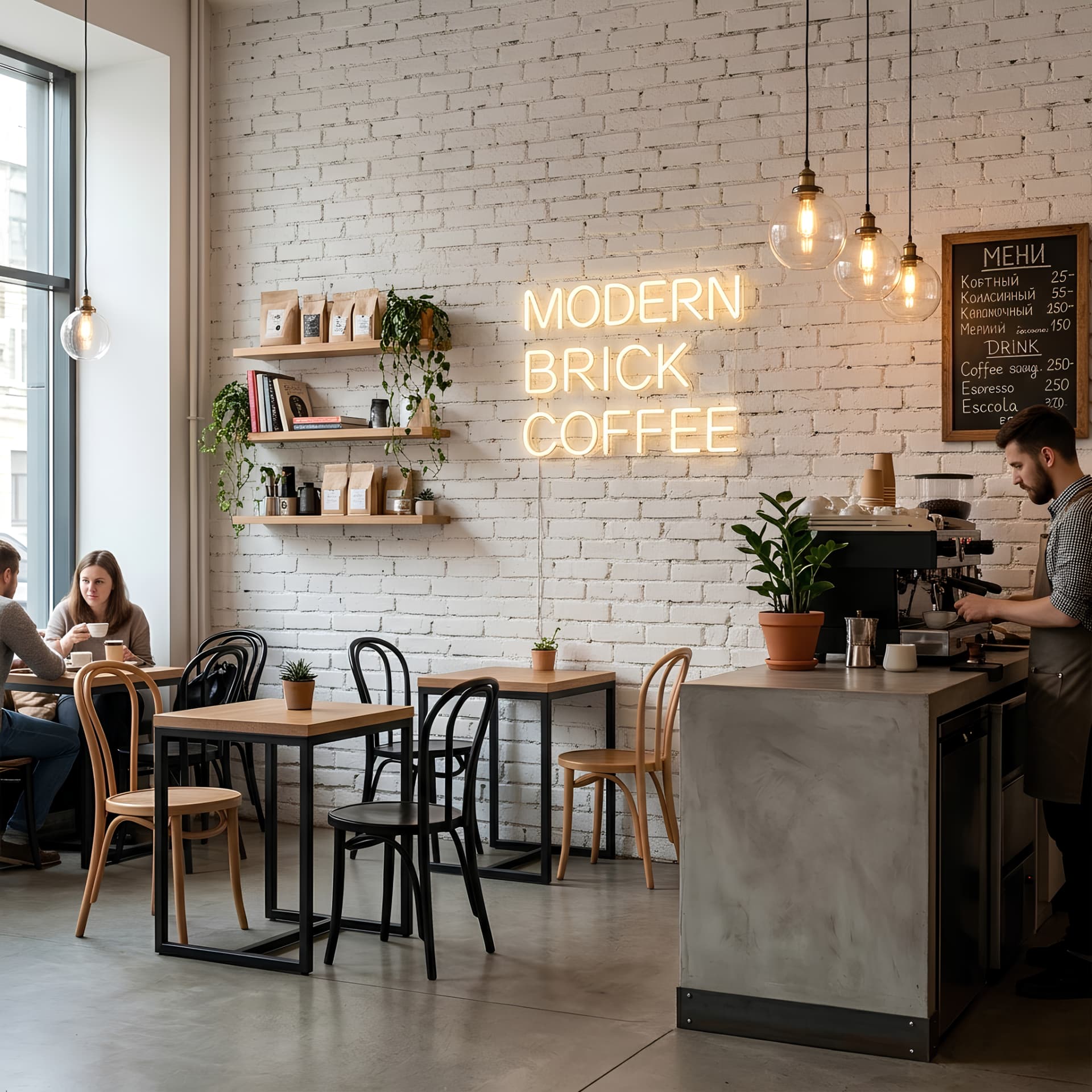
3D White Stone Brick Textile Wallpaper
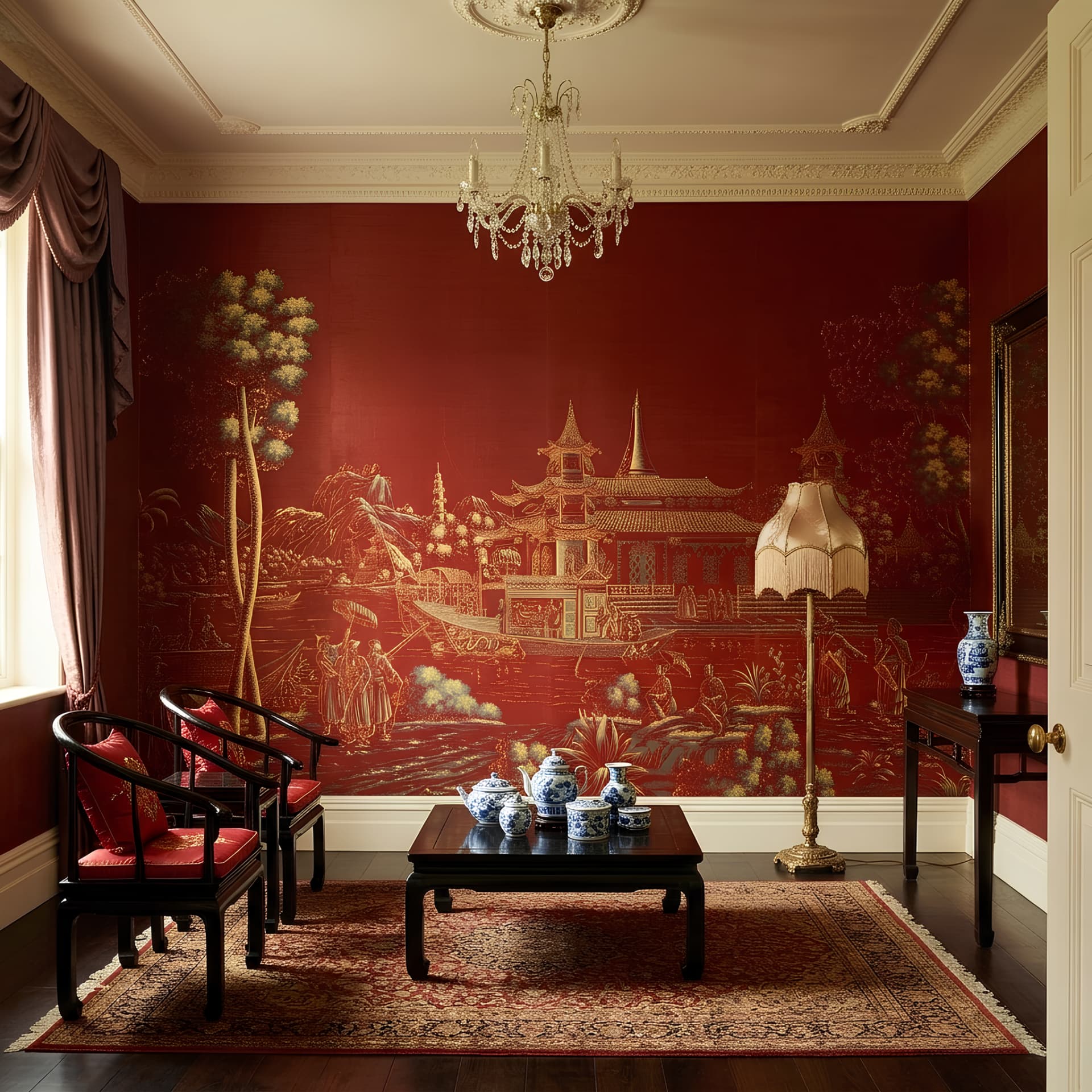
Classic Chinese Motif Burgundy Wallpaper
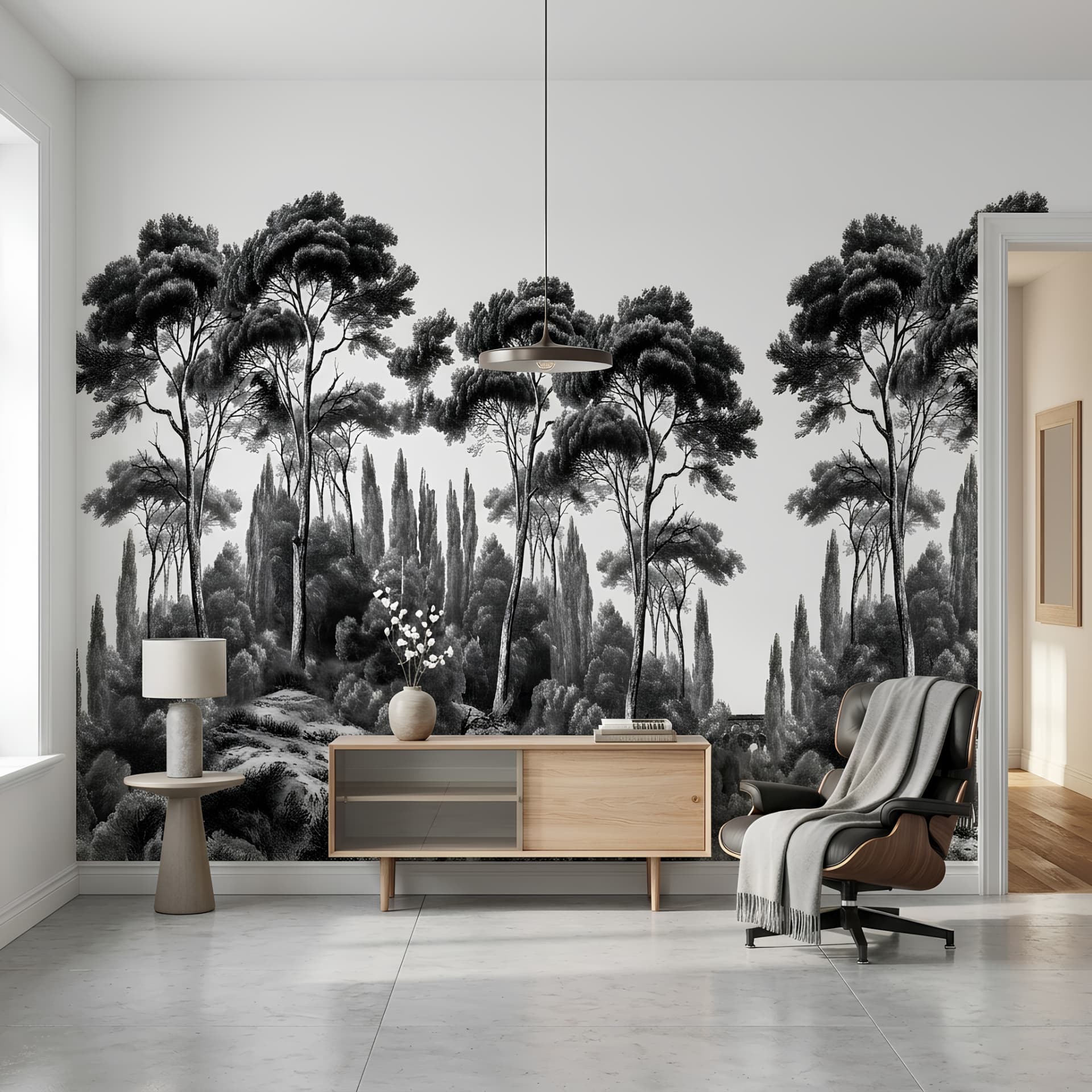
Black & White Vintage Forest Wipeable Wallpaper
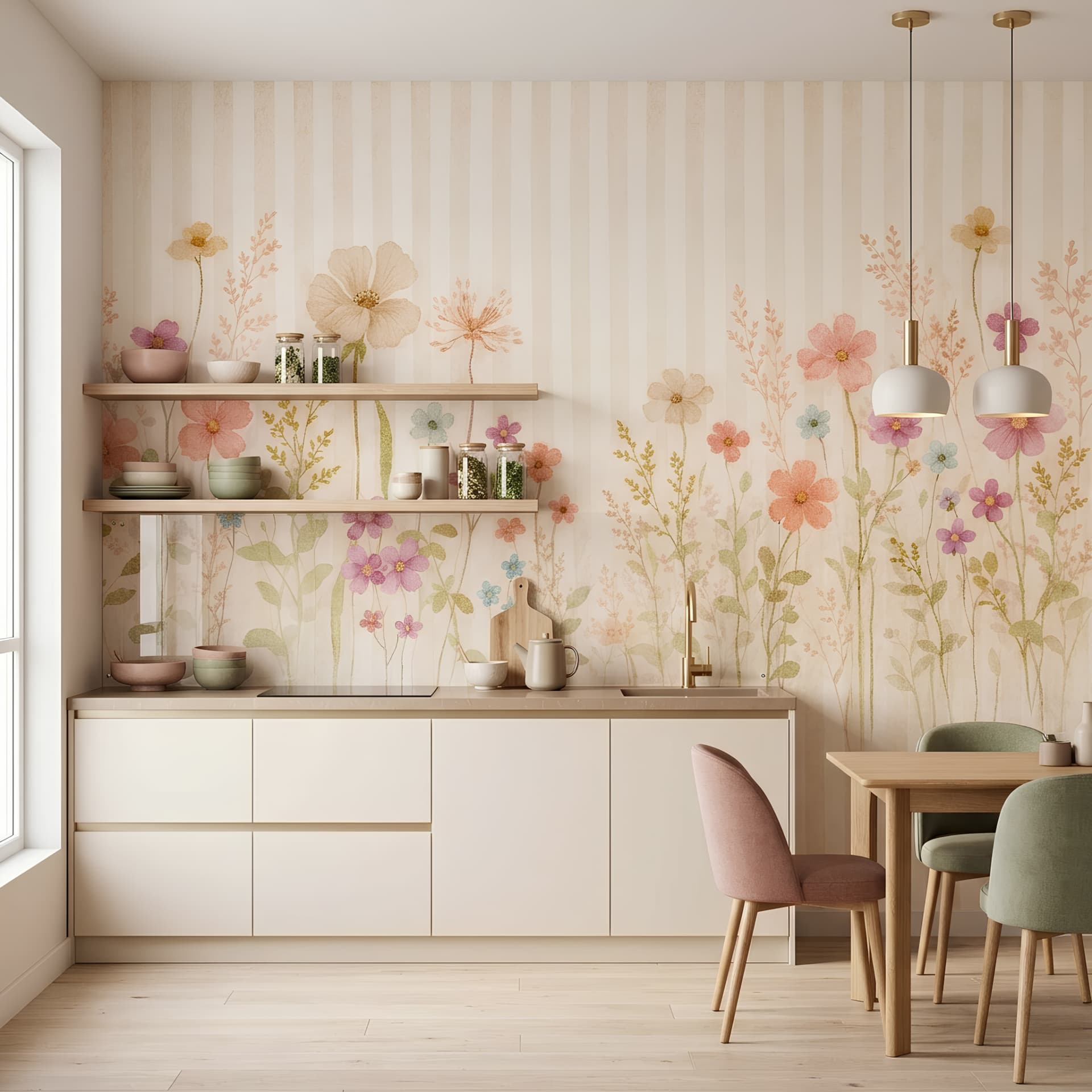
Pastel Spring Garden Striped Wallpaper
DA
Dekoartizan Tasarım Ekibi
Duvar kağıdı sektöründe uzmanlaşmış tasarım ve içerik ekibimiz, iç mekan dekorasyonu, malzeme bilgisi ve uygulama teknikleri konusundaki birikimlerini bu rehberlerde paylaşıyor. Tüm içerikler saha deneyimi ve güncel sektör verileriyle desteklenir.
İçeriklerimiz saha deneyimi ve sektörel uzmanlığa dayanır
traditional wallpaperdamask wallpapertoile de jouyclassic wallpaperperiod wallpaper